Showing posts with label Dracula. Show all posts

Sunday, July 11, 2010

Books: Harper Lee and Tod Browning.

Today is the 50th anniversary of the publication of the classic novel - one of the many claimants for the title "The Great American Novel" - To Kill a Mockingbird. Since this is a horror blog, I'm not going to dwell on the novel's concise vivisection of class and race mores in the South or it's brilliant, ironic use of a child's perspective to create a classic American mock epic satire (the mock epic is the essential American comedy mode, and something which the WSJ is apparently unfamiliar with).

Instead, I'm going to focus on the cameo Tod Browning's 1931 classic make is in the book. In the first chapter, Lee introduces Charles Baker "Dill" Harris. On first meeting Scout, the novel's six-year-old narrator, and her old brother Jem, Dill (allegedly based on the youthful Truman Capote) discusses a horror classic:

Dill was from Meridian, Mississippi, was spending the summer with his aunt, Miss Rachel, and would be spending every summer in Maycomb from now on. His family was from Maycomb County originally, his mother worked for a photographer in Meridian, had entered his picture in a Beautiful Child contest and won five dollars. She gave the money to Dill, who went to the picture show twenty times on it

"Don't have any picture shows here, except Jesus ones in the courthouse sometimes," said Jem. "Ever see anything good?"

Dill had seen
Dracula, a revelation that moved Jem to eye him with the beginning of respect. "Tell it to us," he said.

Dill was a curiosity. He wore blue linen shorts that buttoned to his shirt, his hair was snow white and stuck to his head like duck-fluff; he was a year my senior but I towered over him. As he told us the old tale his blue eyes would lighten and darken; his laugh was sudden and happy; he habitually pulled at a cowlick in the center of his forehead.

When Dill reduced Dracula to dust, and Jem said the show sounded better than the book . . .


Here's the question to debate: In the film, Dracula is not reduced to dust at the end. Is Lee misremembering? Is Dill Capote misremembering? Or is Dill making up a story based on what he's heard of the film and book in order to impress Jem and Scout?

Have some Lane Cake and celebrate an American classic.

Saturday, May 22, 2010

Comics: All aboard that's going aboard.

Bram Stoker's Dracula is an oddly uneven book. It's front-heavy. All the great stuff - Harker's time in Drac's castle; the voyage of the Demeter; Lucy's transformation, death, resurrection, and destruction - happens in the first half or two-thirds of the book. With the possible exception of vampiration interruptus scene, a near perfect vision of the Victorian nightmare projection of sexuality, the last third's pretty slow going. Though we're meant to get the feeling of mad dash through Europe, the result is a strangely emotionless list of ports of call and overland routes, punctuated by repetitious portents from Mina, and ending in a dud fight that end's the count's bloody undeath in an almost exhausted way. Consequently, when artists of various types take up the threads of Stoker's original, it's almost always elements from the early portion of the novel that they focus on. Prequels that give us backstory for Dracula and his three wives, for example, pick up the somewhat hanging thread of the monstrous femme vamps of Drac's mini-harem.

Personally, my favorite episode has always been the short, but sweet log of the doomed cargo ship Demeter. For those who have never read the book, the Demeter is the unlucky ship that has the displeasure of shipping Drac's coffin from mainland Europe to England. Unfortunately for the crew, the count wakes up hungry and starts picking off the sailors one by one. The whole incident is related through the captain's log, so the presence of Dracula is never fully revealed; he's nothing but shadows and fear, a creeping absence, a roll call of names of the missing. In a brilliant closing move on Stoker's part, the bit ends with the lone captain writing down his plan for reaching England, a plan rich in dramatic irony as the readers knows the moment he says it that it ensures he's powerless against Dracula. In this short scene, Stoker truly plays far above his standard level. Here the collage format of the novel, elsewhere little more than a somewhat clumsy lift from Wilkie Collins, is essential to the story: the tension in this scene doesn't come from any ambiguity of the fate of the sailors - they're prey and they never have a chance - but from the fact that the reader understands the situation and the sailors do not. It also has a taut economy to it that is atypical of the rest of Stoker's novel (see previous about endgame).

It has long baffled me that the scene on the Demeter has often been overlooked by adapters and revisionists. The first film adaptation, Murnau's 1922 Nosferatu, included an extended scene based on The Demeter's last voyage; but after that it largely vanishes from the adaptations; Browning's 1931 classic merely alludes to the scene, setting the mold for the majority of adaptations that followed. It seems like perfect horror premise: a crew, trapped on an inescapable boat, hunted by a sinister power from beyond. This is the very template of a million sci-fi/horror flicks, from The Thing from Another Planet to every flick in the Alien franchise.

So, it was no small thrill to hear that, not one, but two projects were revisiting the hulk of the doomed Demeter: a limited series comic from IDW and a flick in-pre-production-limbo flick. We'll have to focus on the one that actually exists at this point. Penned by Pumpkinhead screenwriter Gary Gerani and illustrated by the mixed media art of Stuart Saygar, the expansively titled Bram Stoker's Death Ship: the Last Voyage of the Demeter expands the Demeter scene into a four part mini-series. Promising, but not completely filling, Death Ship reveals what I didn't understand, but what adapters of Stoker's tale seem to have grasped: the Demeter scene is actually really tricky to adapt.

There's a harsh catch-22 at the heart of the task. The bit works because Stoker struck a near perfect balance between the relentless narrative drive of the scene and the amount of detail needed to sell it. At it's heart, the Demeter scene is a countdown to Dracula's arrival in England. The crew of the ship that carries him there is barely sketched out: there's the bold one, the drunk, the kid, and so on. What's important about them in the pace of their deaths: one after the other, the period in between getting shorter and shorter. It's like the heartbeat in Tell-tale Heart or the carpet/hardwood Big-Wheel scene in The Shining in that its power comes from it ever-tightening rhythm. Mess up that coiling rhythm and you mess up the scene.

This means that Gerani is between a rock and hard place. If you're going to make the voyage of the Demeter your story, then you need to flesh out the roles of the crew. In the original, the continuity of the captain's voice is hook enough to hang the interest of the reader upon. We need more detail, or we won't give a toss what happens to the crew. However, every added detail adds some drag to the plot. How much stuff can you add on to Stoker's original streamlined narrative before the drag impacts the speed and, by extension, screws up the pacing that is essential to its dramatic power. The creator's of Death Ship understand that more is not necessarily better in this case. They flesh out the crew as little as possible, working with narration and montage to suggest depth of character rather than risk dragging down the narrative chasing greater detail. The sacrifice, of course, is that the impact of the story comes at a remove. The reader cares less about the fate of the crew and, instead, the story's significance comes from our knowledge of context. This gives the whole thing an air of irrelevance rather fated doom.

That said, I think Death Ship suffers somewhat in a monthly format. The pacing of the story and the pacing of the comic biz do not work well together here. Gathered together, and read in a single sitting, I suspect the story will regain its drive and the economic characterization will seem more like a part of an overall artistic design and less like a conspicuous lack. Delivered as a tight, swift-moving whole, it'll better reflect the atypical verve of the original. Right now, it feels like a bit of a tease.

Though I do like Saygar's Dracula. More Man-bat than Bela, Saygar's vampire is an impressive beast.

Saturday, September 12, 2009

House of Silent Scream: Dance, Dracula, dance!

I think I can say, without fear of contradiction, that Guy Maddin's 2002 Dracula: Pages for a Virgin's Diary is the best silent, all-ballet retelling of the Dracula story that I've ever seen.

Yeah. Ballet. Leaping and such.

Wait! Come back!

Despite sounding like a huge, self-satisfied, art house gimmick, the whole thing holds together surprisingly well. (That's a sentence that works as a summary for Maddin's entire career.) In fact, it only takes a few minutes for these overtly artsy and seemingly provocative decisions to start making sense and pay off. By taking a familiar story and rendering it in dance, the film becomes a sort of ritualistic recreation of one of modern life's foundational archetypes. "Going through the motions" of yet another version of Dracula calls attention to the core of the tale and highlights the power of its repetition. As a viewer, we're forced to re-engage with the story, translating the soundless actions we see through the lens of the hundreds of retellings and interpretations to which we've been exposed, simply by virtue of living in the modern world.

Maddin's reliance on silent film techniques and tech – something he's done in several films to greater or lesser success – seems, in Dracula, to mesh with the overt artificiality of the medium of dance. It parallels the negations at the heart of dance. The same way ballet's force comes partially from eschewing naturalism and dialogue, the self-imposed restrictions of silent filmmaking make Maddin reconsider the system of film representation and encourage him to get the most he can out of what he leaves in play. There's a certain irony here in that, as retro as Maddin's approach is, its suitability for this project is something available only to a modern filmmaker. Without the sense of a deliberate refusal to use certain techniques – something that was not available to filmmakers in the silent era – then the film would lack its lush and self-aware artificiality.

The film is supported by a powerful performance by Wei-Qiang Zhang as the famed vampire. Zhang is a compelling performer, and I say that even though he has no recourse to dialogue or naturalistic motion. His Dracula is convincingly animalistic and sensual, and Zhang uses the defamiliarizing nature of the medium to invest his Drac with profound uncanniness that, in its way, works as wonderfully as Max Schreck's Nosferatu make-up. While watching Zhang's performance, I was reminded of those "my favorite vamp lists" that sprung up in protest over the EW best vampy run down. I don't recall Zhang's interpretation of Stoker's iconic villian appearing on any list, but I think an argument could be made that the force and originality of his Dracula earns him a place on the shortlist.

Tara Birtwhistle's Lucy deserves special mention too. As with most adaptations, Mina gets the greatest amount of screen time and is more central to the plot. But Ms. Birtwhistle's Lucy, with the surging eroticism and attractive mix of innocence and calculation, is the character who will linger in your mind longer.

For all its visual innovation, the plot of Maddin's Dracula (based on the ballet by Mark Godden) is remarkably true to the source material. In fact, Maddin brings back to foreground elements that most film adapters – going all the back to Lang – leave out. Notably, Maddin dredges up the novelistic Dracula's bizarre relationship with money. Though largely forgotten, Stoker's Dracula and his opponents are oddly obsessed with money. Dracula pauses the tight action of Harker's intro, the most intense part of the book, to divert the plot and dig up some buried gypsy treasure. Dracula's financials are considered part of his threat: He partially represents a dangerous flood of foreign capital into the British system. Later, Mina reflects on the efforts of Harker and Lucy's three suitors to bring down Dracula and takes special notice of the financial sacrifices they've made. She contrasts their noble use of money with Dracula's sinister transactions. What all this money stuff is supposed to mean has baffled critics of the novel. Various Marxists have suggested it some hold over Victorian fantasy of the innate goodness of the white upper class in the face of an increasingly international system of capitalism that does not respect Anglo notions of value. Others have suggested it reflects Stoker's own financial unease. Maddin suggests it links up with the xenophobia of the original. Whatever Stoker's intentions, the money-thing is a bizarre facet of the original that most interpreters simply drop. Maddin gets points for working it back in.

Where Maddin does diverge from the original text, he tends to explore familiar territory. Maddin highlights the sensuality of Lucy and plays her death like it was a lynching at the hands of a puritanical masculine mob enforcing Victorian, repressive norms. Though there's an undercurrent of this in the novel, the off-kilter feminist subtext tends to become the text in modern adaptations. Maddin doesn't innovate here, but rather gives us a nod to the story's most common modern reading. The end of Maddin's film also more resembles final scenes of Browning's seminal 1931 adaptation than Stoker's endgame, though Maddin closes out on a shot of an impaled Dracula that evokes the terror tactic Drac's real life inspiration became famous for.

Maddin does add a strange steampunkish iron lung for Lucy mom into the piece. To be honest, I couldn't tell where Maddin was going with that particular bit. At first I thought it might be intended as a loose parallel to Lucy – another women cut off in some way from the world. But, honestly, I'm not sure Lucy is that cut off from the world. Even prior to her vampification, Lucy is a highly sexualized figure. So, I don't know. Maddin also foregrounds the sexual identity of Harker, a figure most adapters shuffle off-stage as soon as the novel's introductory scenes are complete. In fact, his diary is the titular "virgin's diary." Maddin highlights the sexual aspects of Harker's encounter with Dracula and his brides, then plays out the implications of what that would mean for Hacker in terms of readjusting to the safe, Victorian norms his marriage with Mina represents. Unlike the somewhat inscrutable iron lung thing, this adds a nice element of depth to Harker and Mina, a relationship that I think is usually viewed as little more than a speed bump on the way to the more tantalizing relationship between Mina and Dracula.

I'll admit that the pitch for this flick is almost a deal breaker. Happily, it is neither opaque or vapidly pretentious. For all the preciousness of the project, Maddin's finished product is more artsy than fartsy and worth the time of any fan of silent cinema, Dracula, or envelope pushing filmmaking.

Here's the trailer:

Saturday, August 15, 2009

Stuff: In the cards.

The Pointless Museum web site has wonderful gallery of horror themed Top Trump playing cards.


Top Trumps was a slightly more complicated version of war. Simplified, you and another player compared “traits” and the card with the biggest number won.


Though many of the cards feature recognizable horror icons, my favorites are those that either botch known properties – like the dandy fop Godzilla in a cape and a gambler's tie – or use a known figure to illustrate some weird, ill-fitting generic horror type – such as the use of the robot from The Phantom Creeps as "the cannibal."


Plus, even I, Lucas, enjoy the card of the Fish Man!


Friday, August 07, 2009

Link proliferation: The secret lives of horror-themed cereal mascots, sleep paralysis, and making psychopaths.

A Boo-Berry Shaped Hole in His Heart

My vocation as a bon vivant man of leisure requires I commit a certain portion of my day engaged in the aimless wanderings of the amateur flâneur. During yesterday's existential tinged meandering, I came across Artez'n, an Atlantic Avenue shop that sells creative products from Brooklyn-based creative types.

The shop's full of nifty stuff, but the following horror-themed postcards from Ghastly Greetings caught my eye.

Here's "Rise and Shine," by Mister Reusch.


Here's "Boo Hoo," by Bradford Scobie.


Not in Brooklyn? Das cool. You can snag Ghastly Greetings products over their webby site. You dig?

"It’s going to drag me down into an abyss . . ."

In the August issue of The Psychologist, Julia Santomauro and Christopher C. French survey the state of knowledge regarding sleep paralysis: a temporary an consciously experienced state of paralysis, occurring while going to sleep or starting to wake, often accompanied by elaborate and multi-sensory hallucinations.

The article author mention the most common forms of hallucination:

- Proprioceptive hallucinations: sensations of floating, flying, out-of-body experiences; feelings of being lifted up, of spinning and turning; and sensations similar to those felt when going up or down in a lift.

- Tactile hallucinations: sensations of pressure; touching or pulling on the chest, limbs or head; pressure on the bed; feeling the bedclothes moving; and feelings of tingling, vibrating, shaking, pain, smothering or choking.

- Auditory hallucinations: hearing footsteps, knocking, shuffling, breathing, talking, indecipherable whispering, mechanical sounds
(e.g. humming) and other noises.

- Visual hallucinations: seeing wisp of cloud or smoke-like substances or areas of intense darkness; seeing a human, animal or monster and possibly interacting with them.

- Olfactory or gustatory hallucinations.


The authors also run down various historical and cultural non-scientific explanations for the phenomenon. Here's a sample:

For example, in Newfoundland sleep paralysis is called the ‘Old Hag’. This is described as suddenly being awake but paralysed, usually just after having fallen asleep, and often feeling a weight on the chest and sometimes seeing a grotesque human or animal astride the chest (Ness, 1978). Newfoundlanders think it might be caused by either working too hard, the blood stagnating when they lie on their back, or hostile feelings from another person.

In Hong Kong a condition that seems identical to sleep paralysis is termed ‘ghost oppression’ (Wing et al., 1994). Chinese people have often thought that ‘the soul of a person is vulnerable to the influence of spirits during sleep’ (Wing et al., 1994, p.609) and, in a dream classification book written around 403–221bc, there are six types of dreams described. Wing and colleagues suggest that e-meng, dreams of surprise, are actually sleep paralysis and are distinct from ju-meng, fearful dreams.

Amongst the Inuit of Canada sleep paralysis is interpreted as attacks from ‘shaman or malevolent spirits’ (Law & Kirmayer, 2005). In Japan sleep paralysis is called kanashibari and is related to the magic of one of the Buddhist gods, Fudoh-Myohoh. Historically, it was believed that monks could use this magic to paralyse people in their sleep; more recently it is often believed that evil spirits cause the phenomenon (Fukuda et al., 1987). In St Lucia, sleep paralysis is termed kokma and is alleged to be caused by the spirits of unbaptised babies who haunt the area (Ness, 1978). In Korea, it is termed ha-wi-nulita which can be translated as being squeezed by scissors (Dahlitz & Parkes, 1993). Many other cultures have their own interpretation of sleep paralysis and often the cause is attributed to some supernatural force.

Throughout Europe, from the 1500s until the 1700s, sleep paralysis experiences were often considered to be the work of witches who were accused of using their witchcraft to terrorise sleepers who had offended them in some way. Such episodes were sometimes termed as being ‘witch-ridden’. In 1747, a woman testified at a witch trial that she found her husband in bed ‘lying there stiff, barely drawing breath’, and when he woke up he said, ‘My Lord Jesus help me! Oh! Fiery witches took me to Máramaros and they put six hundredweight of salt on me’(Davies, 2003, p.186)


Recipe for a Serial Killer

Jim Fallon is the Professor Emeritus of Neuroscience at the University of California Irvine. He's been studying the brains of psychopathic killers and believes that he's discovered some shared traits. The following is his TED talk on his studies in which he ponders the question "How do you make a psychopathic killer?"

Thursday, July 09, 2009

Movies: In space, no one can hear you suck.

I'm going to propose a hypothesis about Dracula movies. For any Dracula movie that contains a year in the title, the movie's quality is inversely proportional to the absolute value of difference between 1897 (the publication of Dracula) and the year in the title.

To test this hypothesis, we can look at the relative values of Hammer Studio's Dracula 1958, Alan Gibson's Dracula A.D. 1972 (a.k.a. Dracula Chases the Mini Girls, where "mini girls" means girls in short skirts and not, sadly, midget women) and Patrick Lussier's Dracula 2000. The hypothesis correctly predicts that the best of the lot is the stylish and inventive 1958 flick, which some feel represents the high point of Hammer's creative output. The once-trendy cheesiness of 1972 makes it at least fun to watch, giving it second place in our trio. The dour, clumsy, and stylistically inert 2000 performs the worst of all three test subjects.

I bring this up to provide a firm scientific context for my review of Dracula 3000: Infinite Darkness, the low-budget sci-fi/horror/actioner that takes the Dracula mythos and projects it 1,000 thousand years into the future, into a universe of intergalactic space travel, androids, and Coolio.

That's right. Coolio.


This context is important because, as I discuss the film, you might be tempted to think, "What an amazingly wacky flick, I should take pains to experience it for myself!" But don't be fooled. Remember the Dracula Title Year Hypothesis. It's science. You can't argue with it.

The film opens with Udo "anything for a buck" Kier as captain Varna of the spacefaring cargo ship the Demeter. In the first in series of video log entry interruptions that act as a running exposition, Varna explains that his cargo ship is on a return run from the planet Transylvania in the Carpathian system. He also complains of some sort illness has struck the crew.

Cut to 50 years later, and the intrepid crew of the salvage ship Mother (despite all the clamor George Clinton made over the Mother ship in the day, I must say that it's a little disappointing when you actually see it) it on their way to make a quick buck of the floating hulk of the Demeter. The salvage crew is led by Captain Abraham Van Helsing, played by Casper "the friendly ghost of a career" Van Dien. His crew includes the by-the-book second in command and love interest Aurora Ash, played by Baywatch alum Erika Eleniak. There's also the pot-addled 187, played by Coolio, natch. Tiny Lister provides the muscle in the form of the brutish Humvee, who never explains why his nickname means any more to his 31st century comrades than the nickname "Lectica" would mean to us. The brains of the operation is the wheelchair-bound brainiac Arthur Holmwood, whose allusive name is wasted because there's no Lucy Westernra analog. Nor it is explained why, after a century of tech development, the wheelchair apparently remains the best option for people who have lost the use of their legs. Finally, the crew is completed by the inept navigator-intern Mina Murry. Like Arthur's name, it is another wasted allusion.

The crew of Mother reaches the Demeter and, after scanning the ship and finding no signs of life, sends in Humvee and Mina to recon. After a false jump scare, the two test the oxygen in the ship using the traditional method of the sci-fi space explorer: they pop of their breathers and see whether or not exposure to toxic fumes or lack of oxygen kills them. Since they don't die, the ship is declared safe and the rest of the crew boards. Holmwood gets most of the Demeter's systems online while the rest of the team searches the ship. They find a small collection of coffins, the sole cargo of the ship, all filled with sand. They also stumble across the desiccated remains of Varda (what happened to the rest of the crew mentioned so many times by Varda in the video logs is unclear). The corpse of Varda is still clutching a crucifix, which baffles the salvage experts because religion was apparently outlawed decades ago. Whether or not this ban has anything to do with all the Soviet iconography around the ship – Did Soviet Communism experience a second wind and finally crush the West? And, if so, why then are these salvage guys so keen on the market value of the ships they find? – is never explained.

As pleasing as it might have been to watch Casper Van Dien and Tiny Lister debate the merits and shortfalls post-Soviet universal secularism in a universe that clearly allows for the existence of the supernatural, the salvage crew doesn't have time to ponder these abstractions. Almost as soon as the Demeter comes online, Mother "inexplicably" (read, Dracula) decouples and launches off into space. Trapped on the Demeter, the crew starts getting picked off by Dracula. Coolio goes first. Drac turns him into a spastic vampire and orders him to destroy the rest of the team. He attacks his former coworkers several times, eventually turning Mina into another bloodsucker.

During these hit and run attacks, Dracula corners Aurora and makes as if he's going to bite her. However, we find out that he never goes through with it because she turns out that she's an android narc sent by the galaxy police or whatever to keep an eye on Van Helsing's crew of disreputable scallywags. Instead of killing her, she claims Drac spilled his guts to her. He said that Transylvania was a planet of vampires, but Drac's now the last of his kind, the sole survivor from the now dead planet. He wants to get to Earth to get some grub.

Finally, in a fight scene that includes an unnecessarily extensive monologue in which twitchy vampire-Coolio describes masturbating to visions of the second-in-command, Coolio is dispatched by a pool queue through the heart. Sending him to . . .


Now fully convinced that their problems are vampirical in nature, the remaining team members do what anybody would: They google "vampires" to figure out what to do. At this point the viewer learns that the vampire stalking the Demeter is, in fact, the Dracula of Stoker's book fame (traveling under the alias Orlock). Further, we learn that Van Helsing is the great-great-great-and-so-on grandson of Stoker's original vampire hunter. Holmwood freaks out at this notion and suggests that what is really happening is little more than a revenge plot. Drac has waited more than a millennium to end the Van Helsings. Curiously, either his research is insufficient or he simply finds it a coincidence that his name and Mina's also appear in the original story, because those links don't bother him at all.

At this point, viewers can construct a backstory on their own and it goes something like this. Dracula was real. He came to England in the late 1800s and fought Van Helsing and the many suitors of Lucy. He was somehow not actually killed at the end of the conflict. He stayed out of the limelight for a few centuries, apparently having a low intensity conflict with the Van Helsing family. Whenever long distance space travel became feasible, he hopped on a ship went to a distant planet in another galaxy to set up, for some reason, an all-vampire world. Which, in retrospect, was a bad idea. Without something to feed on, the new Transylvania became a dead world. But, Drac couldn't just ditch the dead planet. Instead he waited until the year 3000, when the family he was fighting on Earth would come to him in far space. That way he could combine his vengeance with his move.

The salvage teams google search reveals that sunlight and stakes through the heart are the two ways to kill a vampire. At this point Officer Robot announces that there is no sunlight in the dark of space – an unfortunate mistake since ever freaking visible star is, in fact, a sun and, without atmospheric effects to disperse it, the light they give would be the very definition of direct sunlight – so they'll have to aim the ship at a double sun system and hope they can keep Drac and Vampire Mina of their backs until they get there.

The crew gets proactive and they find Mina sleeping in a coffin. They stake her, but have a harder time with Drac, who manages to vampate Holmwood and Van Helsing. Humvee manage to dispatch the newly minted bloodsuckers, but the worst they can do to Drac is lob of one of his arms when he gets it stuck in one of the ships massive steel doors. Trapped on the ship with a wounded, but still deadly Drac, Humvee and Aurora realize that they cannot prevent the Demeter from crashing into the sun.

Aurora announces that, prior to being upgraded to a cop bot, she was a pleasure droid. She suggests that they spend their last few hours have sex. Humvee picks up Aurora, throws her over his should like a sack of potatoes, and goes off to look for somewhere to have sex.

Their ship hits the sun and everybody dies.

The end.

I actually applaud the makers of this flick for its bizarro ending and their willingness to dispatch their Van Helsing character. Unfortunately, this little treats aren't enough to save the rest of the flick. Visually dull, crippled by a script that is neither scary nor funny, and carried by a cast that seems slightly embarrassed to be there, Dracula 3000 is strongest evidence yet for Dracula Title Year Hypothesis.

Sunday, October 26, 2008

Books: "Monsters. I think they are so terrible! Somebody should destroy them all so that we, the humans, are safe. You come to castle?"

Simon Rich's second humor collection, Free-Range Chickens, contains more of the short and sweet comedy pieces that his debut collection, Ant Farm, was full of. Each bit only runs one or two pages long. This is just enough time for Rich to brilliantly riff on modern fears, hopes, and humiliations, while never overstaying his welcome. His imagination roams wide and far - from the pre-historical moment when the world's oldest profession was the only profession to an imagined conversation between the various murderous maniacs a 7-year-old Simon imagined gathered in his closet every night (with guest appearances by Freddy and Chucky).

Here's the first of three vampire-marketing gags that appear in the new collection.

Match.com profile

NAME: Count Dracula

OCCUPATION: Aristocrat

LOCATION: Castle Gothica, Transylvania

ABOUT YOU: I am normal human looking for human woman to come to castle. I am normal, regular human. I like the popular music and television. You come to castle.

WHAT COLOR BEST DESCRIBES YOUR HAIR?
Black.

WHAT COLOR BEST DESCRIBES YOUR EYES?
Red.

WHAT IS YOUR RACE?
Yes, I am of the human race, like you.

WHAT IS THE LAST THING YOU READ?
The Christian Bible, because I am regular kind of guy.

WHAT IS YOUR PET PEEVE?
Monsters. I think they are so terrible! Somebody should destroy them all so that we, the humans, are safe. You come to castle?

DO YOU CONSIDER YOURSELF A SOCIAL PERSON?
Here is the thing. I am very social person, but the people in my village are not so good to be friends with. For instance, sometimes they say things that are not true about other people in the village. It is not good to believe all the things that are said in my village.

DO YOU WANT CHILDREN?
Yes. You bring children to castle.

FAVORITE THINGS?
I like walking around in sunshine, eating regular foods, sleeping in normal human bed. I am regular human. Here is thing though: when you come, it is better if you come at nighttime. You stay in your own private room at top of staircase. You have normal, regular sleep experience. In the morning, we go outside in the sun.

ARE YOU A 9-TO-5ER? OR ARE YOU YOUR OWN BOSS?
I am my own boss.


If you want to read Drac's ad promoting Castle Gothica as a teen summer tour location or his mailer for a dubious Red Cross blood drive ("The blood you send is for the normal humans."), then check out Free-Range Chickens. FRC, from Random House, is out now and will run you 17 Washingtons in hardback.

Saturday, October 18, 2008

Stuff: You want to suck what?!?!

This is a clip of Richard Pryor discussing The Exorcist and Dracula. It's from his 1974 album: That Nigger's Crazy. What more is there to say?

Though this needs very little by way of introduction, it does need a big ol' NSFW warning. But then you'd probably already guessed that.


For some bonus Pryor sci-fi geek fun, here's a scene from The Richard Pryor Show featuring Pryor as the bartender at the "Star Bar," a bar packed with actors wearing the actual costumes from the Mos Eisley Cantina scene from Star Wars. Again, not safe for work. Of course.

Saturday, November 24, 2007

Movies: The good, the bad, and the ugly.


Hello, Screamers and Screamettes, welcome to a special edition of this humble horror blog. Today we cover three – count 'em: one, two, three – horror flicks in one entry. Within a single entry, your headstrong horror host will try to cover the 1980 creature feature B-flick classic Alligator, the Masters of Horror episode "Homecoming," and Jess Franco's Dracula.

We've discussed somewhat peripherally the idea that some cats botch their perfectly serviceable horror flick ideas by loading so high with ideological baggage that the flick collapses under the weight. The first two flicks on the docket today are perfect case studies in the do's and don’ts of adding political commentary to your horror flicks.

Alligator is – truth in advertising – about a big ol' gator. But, instead of sitting around in some swamp, gobbling up small mammals and harassing retirees, this ambitious descendant of the dinosaurs terrorizes a city. The plot riffs off the classic urban legend: A pet alligator gets flushed down the toilet and takes up residence in the sewers. This would be fun enough, but a local chemical research firm sweetens the pot by dumping the corpses of illegally-obtained and growth-hormone besotted test animals down the drink. These become gator chow and, after a couple decades of such treatment, we've got an angry gator the size of a car. After a local reporter definitively proves the existence of the giant lizard, the police swarm the sewers to exterminate the beast. Fortunately for viewers, this just flushes the beast up into the city where wacky high-jinks ensue.

Now, admittedly, there's a lot horror fans could dismiss about Alligator: the goofy plot, the no longer all that special effects, and the unfortunate efforts the filmmakers made at representing African American street culture. These elements haven't aged all that well. But, I say that people who can't look past that stuff just hate life and joy and I'm glad – GLAD, I sez – that the pleasures of such top quality cinema-cheese are lost on them. Seriously. Alligator is a freakin' hoot. The script, which is much better than it needed to be, was one of the earlier efforts from later indie icon John Sayles. Lewis Teague, who helmed the pic, is one of those sadly underused bastards who just never got the chance to direct real flicks. He learned his craft as the second unit director for The Big Red One, a production manager on the Woodstock documentary, and as editor on Monte Hellman's Cockfighter. Together Sayles and Teague manage a narrative efficiency and flashes of ruthlessness that echo the (superior) Jaws. An excellent performance by Robert Forster (speaking of sadly underused bastards) as the cop who knows the truth, but gets hushed up by the powerful interests pulling the department's strings, is the cherry on top. Dean Jagger also turns in a wonderful performance as Slade, the "great white hunter" character who comes to the city to hunt the out-sized reptile.

Now, as to the political content of Alligator, Sayles' script manages to get clever little ideological digs in without letting any of them overwhelm the central issue of the film: the fact that a big, hungry gator is stomping its way through the city. We get to see how corporate interests influence the politics of the city, we get some scenes which reflect the racial tensions in the city, and we get a strong environmental message. The film is at its most political in the depiction of how the police react to the gator. After an initial embarrassing show of force, they "play by the book" and make showy, but ineffective, efforts (such as hiring Slade, a more violent version of the late Steve Irwin). So long as the gator is chewing its way through the ghettos, the cops don't sweat it too much. Once it starts eating its way through the white suburbs, people start taking it seriously. Finally, when it threatens the mansions outside town, the cops have no problem throwing out the rulebook and trying anything at their disposal. What's great about Alligator is that all this is thoroughly integrated into the plot without some character, standing in for the conscience of the filmmakers, patting themselves on the back over its inclusion. We understand how ingrained these issues are by watching them play out. We never get a speech in which somebody bemoans that fact that our own environmental negligence has caused this crisis. We never get the hero cop lecturing viewers on how institutional racism has made the gator problem worse. The political content is, in the advice of writing classes everywhere, shown and not told. We don't get a lecture on the ills of the modern city; we just see those ills.

In almost perfect contrast, "Homecoming" is a political lecture thinly disguised a zombie flick. Helmed by Joe "Gremlins" Dante, this episode of the Masters of Horror is the weakest of the series I've seen so far. The plot is about as satisfying as a pundit's talking points. Mired in a war overseas – a war launched on with the justification of non-existent WMDs, natch – the President (clearly Bush) makes a public statement to the effect that he wishes the soldiers who have died in the war could come back so they could express how deeply they believed in the cause they died for. Soon thereafter, dead vets start digging themselves out of graves in order to vote against the simulacrum Bush. Along they way we get a faux-Rove and a not-a-Coulter (interestingly, we get no analogs to Powell or Rice, two of the most important players in the lead up to the Iraq War – one wonders if the filmmakers hesitated to create African American villains out of fear of offending the PC sensibilities of fellow travelers). Lest we miss the too-naked political content, we even get a helpful first person narration that explains things like "We'd said we’d count their votes and we hadn't" and "Our lives are precious." To steal a phrase from Raymond Chandler, the whole flick's about "as subtle as a tarantula on a wedding cake." The film feels like some sort of bizarre loyalty oath for modern liberals: a lopsided with-us-or-against-us history of the contemporary political scene as written by the gents who used to crank out EC's horror comics. It isn't enough to believe the current administration is dishonest (which it is), but the flick needs you to believe that it would kidnap and torture Cindy Sheenan into supporting the war (which they obviously didn't). In his brilliant essay "Paul, Horror Comics, and Doctor Wertham," Robert Warshow brilliantly described the cartoonishly simple-minded morality of this thinking:

The assumption that human beings will always follow out the logic of their characters to the limit is one of the worst elements in comic books, and is pretty widespread in them. If a man is a burglar, he will not hesitate to commit murder; and if he is going to commit murder, he is often likely to think of boiling his victim in oil as of shooting him.

Warshow mentions how poachers illegally trapping beaver in the Mark Trail radio serial would unhesitatingly shoot any game wardens they came across, as if the moral flexibility that made one hunt game off season would also, obviously, mean you were cool with capping officers of the law. Often we're smart enough to recognize the stupidity of this moral logic. When an old "educational film" suggests that the first puff of a joint inevitably leads to a life of prostitution and a death in the gutter, we call it camp. When, however, the Village Voice sees the same level of thinking in "Homecoming," it declares the flick "one of the most important political films of the era." What was good enough for the narrative logic of Mark Trail comics is now good enough for political rhetoric. What's remarkable about Bush is not his stupidity, but how he's made all of his critics stoop down to his level.

Alligator is a fun horror movie with a clever social consciousness that elevates the project rather than swamps it. "Homecoming" is an embarrassing indicator of how much the modern left has lost by capitulating to a organized disingenuousness that replaces engaged moral and intellectual effort with a vulgar irony that auto-excuses our own lack of commitment to our ideals. The former is today's good; the latter is today's bad.

Today's ugly is Jess Franco's Dracula. In a misguided bid for credibility, Franco shot a straitlaced version of the famed Stoker novel, eschewing his trademarked sleaze while failing to improve on his lackluster visual style or his lazy grasp of filmmaking basics. Imagine a porno flick that's got all the actual sex cut out of it and you'll have a good idea of what watching Franco's film is like. Let's never ever discuss this movie again.

Wednesday, April 25, 2007

Movies: Blood: How far will you go to get it?

According Bloody Disgusting, the horror news site, a director has been attached to the upcoming Dracula sequel currently titled Un-Dead. Un-Dead is being pitched as a direct sequel to the Bram Stoker novel. It picks up the thread of the plot 20 years after the novel closes and, as far as I can tell, ignores the famed Universal franchise and the innumerable "Dracula" pictures Lugosi and Browning inspired.

I think this project sounds like a great idea. After all, Coppola managed to provide the old vampire with some fresh blood by revisiting the original novel and making what, so far, is the closest filmic adaptation (and even that is pretty wide from the mark – adding the whole Mina/Drac backstory that is completely absent from the source text). Revisiting the original novel, even in such a roundabout way, might make for a solid script.

What gives me pause, though, is the choice of directors. According to B-D, Ernest Dickerson, who shot the post-Boyz in da Hood thriller Juice ("how far will you go to get it?"), will be helming the new pic.

Don't get me wrong. I actually kinda liked Juice. As far as the late 90's glut of neo-blaxploitation films went, it was a stylish, thoughtful, and remarkably restrained flick. Compare its slow build and carefully drawn character interactions to the over-the-top violence and repeated lectures of the more famous Menace II Society and you might be forgiven for thinking Juice was actually the better flick. But since then, Dickerson cranked out Surviving the Game (an Ice-T-centric reworking of The Most Dangerous Game), Tales from the Crypt: Demon Knight, and skateboarding-meets-basketball sci-fi sports flick Futuresport ("starring" former television Superman Dean Cain, singer turned movie un-star Vanessa Williams, and Wesley "I'll be Blade one of these days" Snipes). After that short and unhappy decline, he's mostly done television stuff. Some of it, including stints on HBO's fine crime drama The Wire, is good stuff; but we know what they say about second acts . . .

Sunday, March 04, 2007

Comics: This doesn't royally suck.

Recently, at the New York Comicon, I got the chance to ask the gents at the Silent Devil booth just what happened to their Dracula vs. Capone series. The first of three issues came out several months ago and, since then, nothing. The bad news: the date for issue two is still uncertain. The good news: the series, despite setbacks, is still very much alive and Silent Devil intends to get the series completed as soon as they can.

On getting this bit of info, I thanked the dude at the booth and started to walk away.


"You ever read the first one?" he asked.


"What first one?"


"Before Capone, we did this thing."


He held up the trade edition of the 2001 and mini-series Dracula vs. King Arthur.


Of course, I bought it.


As I've mentioned before on this blog, I've got a weakness for the monster-mash formula of taking two well known characters and ramming them together into a single story. Admittedly, the results are almost always heavy on the cheese and weaker than a strong outing of each character on their own. But I can't help it. It is just too damn fun. How does one maintain a proper critical stance when you're talking about, say, Billy the Kid trying to gun down Frankenstein's monster? If you can, you're a better critic than I – but you're also a joyless bastard that hates happiness and all that is good and true about life.


Dracula vs. King Arthur is actually about as low on the cheese factor as you can get and still have something called Dracula vs. King Arthur. Sent back and time and vampirized by Satan, Dracula tears through the traditional Arthurian legend killing or turning minor and major characters with ludicrous abandon. Arthur and his knights, being completely unfamiliar with what a vampire is (actually, one of the nice touches in the book is that Dracula doesn't know what a vampire is either and most test and explore his new powers and limitations), are routed. Eventually Merlin figures out what they are facing and, armed with water from the Holy Grail, Camelot goes on the offensive. This leads to a wonderfully apocalyptic conclusion that at once subverts and satisfies the Arthurian themes of the work.


The writing is filled with details from the stories of both legends (with Drac built heavily from historical sources rather than Stoker's source novel). The story moves at a brisk pace, quickly dispensing with the exposition and launching into the action. The characters, especially those drawn from the Arthurian legends, stay mostly true to type; but the writers wisely avoid in slavish loyalty to the traditional narrative, happily having such key characters as Lancelot and Guinevere go all bloodsucker on us.


The art is bold and communicates the story well. It occasionally feels thick and cumbersome, but the action is well-handled and the artist even manages to slip in some allusions to prior vampire comics (specifically some references to Marvel's Tomb of Dracula).


I should also mention that Silent Devil continues is welcome tradition of reasonable pricing. The most recent trade of DC/Vertigo's critical and commercially successful Fables collected four 22-page stories (only three of which carried any story arc, one being a semi-disposable one-shot). It padded this offering out with script pages, a few goofy maps, a cover gallery, and several advertisements. For this package, Vertigo wants you so shell out $18.00. Silent Devil's trade of Dracula vs. King Arthur collects four 32-page stories, and includes several pages of completed story not featured in the original comics, a cover gallery, character sketches, and not a single advertisement. Silent Devil's book costs a buck less.


A fun, smart, affordable book – what more do you need?

Thursday, January 25, 2007

Comics: Of course you realize this means war.

There's a fine line between wanting to deliver the goods to your reader and pandering. War of the Undead, a new mini-series from IDW, avoids lapsing into pandering elevating the practice of pandering to a manic art. The first issue of this thing is packed to the point of absurdity with horror tropes, clichés, and classic moments barely reworked that it flies by in a crazed whoosh, laughing hysterically it all its own bizarre and wonderfully surreal excess.

I'm going to try to summarize the action of the first issue. It's the last moments of World War II and the Nazi war machine is on the brink of total collapse. Hitler has just committed suicide in his bunker and a confused Nazi officer is dispatched on a strange mission: collect Hitler's one testicle. (I'm not kidding.) Apparently it is want by the head of cabal of Nazi black magicians and mad scientists. As a last ditch effort to save the "master race" this scientist and his mummy man Friday have raised an army of zombies. To lead this coalition of the rotting, his revives Dracula and Frankenstein's monster. Though this only happens after we get a gory battle royal between Nazi zombies and the Dracula's protective harem of vampire wives (a battle the ends when somebody rams everybody with a plane). Along the way we get a cameo by Robbie the Robot, some Satan worship, and an allusion to the famous WWII era photo of Russian troops raising the hammer and sickle flag in the rubble that was Berlin.

All this comic is missing is Godzilla and, maybe, a musical number.

As far as plots go, this is about as thin as a plot can get and still deserve the name. The story rolls from go from Berlin to Transylvania to wherever else it wants to with all the care and finesse of a speeding 18-wheeler whose driver had a heart attack and died while trying to negotiate a particularly treacherous ice-covered mountain road. In fact, it is really less of a plot than it is an excuse to just do neato things. The development of characters is strictly functional: this guy is a Nazi; there's our mad scientist, that guy is a zombie; that is an ape with a human brain implanted in its head; and so on. Everything seems aimed towards or sacrificed to the goal of giving the horror fan maximum entertainment.

I know this sounds like I'm putting the book down. I'm not. This one-track approach is the book's strength and the best reason to give it a look-see. There's something great about War of the Undead's complete dedication to giving the reader everything they can thing of. It isn't some cynical, half-assed, tired effort snag our comic buying dollar with more of the same old, same old. Instead, it takes joy in pulling out all the stops. It flirts with becoming an utter and total mess, but achieves a sort of anarchic wildness you don't often see in comics. For all their anti-heroes and violence and fan service, comics want a seat at the big media table. As such, even their scandals now come in $50 slipcase editions. War of the Undead is like a great rock single. It is short, fun, and doesn't sweat the fact that its pleasures are disposable.

About my only complaint is the art. The cover gives us a wonderful painting of a Nazi zombie, gore dripping from its mouth. The innards, however, don't live up to the expectations the cover sets. The art is somewhat clumsy, made more so by heavy-handed coloring that undermines the gore and mood.

The pleasures of War of the Undead are slender and specific, but it delivers on them in full.

Friday, December 15, 2006

Book: To be read . . . to be truly read . . . that would be magnificent.


A film critic whose name now completely escapes me once opined that the strength of the Aliens film franchise was its willingness to allow every director who helmed an installment of the series the freedom to re-invent the franchise and stamp their unique mark on it.

The same can be said of the Universal Monster novels released by Dark Horse Press: Despite the pulpy concept behind the project – a series of new novels based on the classic Universal monster characters – each entry in the series has been not only enjoyable, but distinctive in its approach, mood, and handling of the film source.

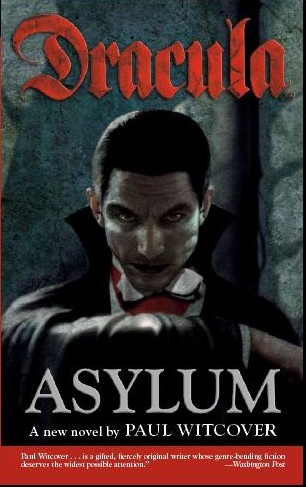
In Dracula: Asylum, critically acclaimed but sadly overlooked fantasy author Paul Witcover builds a moody, Gothic tale around the most famous filmic vampire of all time: Bela Lugosi's Dracula. Written as a genuine sequel to the 1931 film (the Universal franchise spawned several "sequels," but unlike the Frankenstein films, the Dracula sequels blithely ignored continuity and stubbornly refuse resolution into a single grand narrative), the novel is set several years after Dracula's destruction in the ruins of Carfax Abbey, in the final year of the first World War. Seward's asylum, where most of the film took place, is now the Carfax War Hospital. Shell shocked and physically ravaged soldiers fill the rooms once populated by mental patients. However, one recognizable patient still haunts its halls. Renfield, once Dracula's thrall and now an aged mute, works as a janitor in the hospital.

Enter Lisa Watson, an American psychologist who has used powerful family connections to get stationed at Carfax. She's come to treat Captain Faulks, an American soldier who, after being wounded and left for dead in what amounted to a suicide mission, lost his mind and began believing that he was Sherlock Holmes. Dr. Watson's interest is not solely based on the charming literary coincidence: Faulks is her fiancé.

Watson's efforts to restore her would-be husband's memory soon take a back seat to her struggle to survive. A German bombing raid on Carfax disturbs the vaults of the neighboring abbey and awakes Dracula. With Renfield once again serving as his slave, Dracula begins to prey upon the patients and staff.

Witcover's entry to this series might be the slyest of the bunch. The novels narrative hews very strictly to the details provided in the original. Along with the asylum, the abbey, and Renfield, Mina reappears as well. Its plot is fairly straight forward and the details of trench warfare and early 20th century psychology (including extend scenes of a brutal night raid and the details of shock therapy) are well-researched and finely drawn. Witcover's characters are among the most developed in the series and Witcover manages to give the readers a sense of real depth without detracting from the novels steady forward momentum. However, in many ways, the book is more postmodern than Di Filippo's overtly revisionist Creature from the Black Lagoon novel. Witcover makes allusions to British literature, from overt references to Doyle and Lewis Carroll to lit-scholar in-jokes about Milton. These literary allusions are found side by side with pop culture references, such a re-contextualized lines from the original film and the Holmes/patient and Watson/shrink plot device from the obscure film comedy They Might Be Giants. I especially enjoyed the cameo of a character named Frye, a nod to Dwight Frye, the actor who brilliantly portrayed Renfield in the film. Unlike Petrucha, who spiked his retro style plot with some modern splatter tricks, Witcover saves the gore for the World War I battlefields and cloaks Dracula in a sort of decadent and opulent dread. While it never gets frightening, it is effectively suspenseful and compelling.

I really only have two complaints with the novel. First, Witcover takes his time to allow the menace and suspense to build. Overall the effort works, but occasionally I felt it dragged a bit. Second, and perhaps more seriously, a subplot involving Dracula's origins derails the novel temporarily and introduces a whole bundle of confusing and unresolved questions. Without going into the details of it, Witcover connects Dracula to the Biblical stories of Jesus and Judas. Unfortunately, this whole bit of backstory is so unexpected and, ultimately, so unimportant that it is more confounding that interesting.

So far, my personal favorite of the DHP series is still Di Filippo's quirky take on the Gill-Man. But I suspect that most readers will actually find this the more engrossing and better written novel. Arguably it is the best written, most developed work in the series to date.

Wednesday, October 04, 2006

Comics: I never drink . . . bootleg hooch.


Some concepts are just so goofy, such bluntly designed vehicles for instant fanboy kicks, that they become cool. One of these concepts is pitting Dracula, vampire king of the damned, against Al Capone, king of Prohibition Era Chicago. And this is exactly what the somewhat un-creatively titled comic Dracula vs. Capone does.

The title pretty much says it all. In Chicago, the "Roaring" part of the Roaring Twenties refers mainly the fire of Thompson machine guns as Capone locks down the city. Fortunately for the good citizens of the Windy City, Capone's reign is not unchallenged. A new threat, in form of an upstart Treasury agent named Elliot Ness and his so-called "Untouchables" are giving Scarface some trouble. As the forces of organized crime and justice prepare to face off, a new player arrives on the scene. Dracula, reawakened by blood-tainted rain, comes back to life with a small army of thirsty vamps. The head blood-sucker plans to use the chaos and random bloodshed of Chicago to hide his efforts to re-establish his rule over the night. And with that bit of backstory, it's on.

Goofy? Sure. But goofy with a pedigree. Horror cinema used to be filled these bizarre mash-ups. Sherlock Holmes versus Satanic cults, Jesse James versus Dracula, any number of monsters versus one another. None of these pictures were, perhaps, cinematic gems, or even highlights of the horror genre. Though they were not without their place. These pictures were treats for genre film fans. Why treat horror lovers to just another werewolf film when you could have the Wolfman face off against Dracula and Frankenstein's monster, all in one film? Sadly, the death of the B-film has mostly ended this sort of silly, but flat-out fun sub-genre. With the exception of Jason versus Freddy and the lame VanHelsing, mash-ups seem to be a thing of the past.

At least, they are on the big screen. In comics, the hybridizing spirit is alive and well. Want to see Mark Twain and Tesla (the inventor, not the band) go up against Lovecraft's Elder Ones? Check out The Five Fists of Science. Can't decide between vampires and pirates? You don't have to with Sea of Red. Want to see Dracula take on the Silver Surfer? I can't imagine you did, but you can find that in Essentials: Tomb of Dracula. What is The League of Extraordinary Gentlemen but a giant mash-up? In fact, the efforts of folks like Moore have ensured that the comic mash-up has not only thrived, but gained a level of artistic respectability within the medium that the film variety never achieved.

That's a long way to go to say that the idea is not without precedent. And, if Dracula vs. Capone were just a fun throwaway in this long line of mash-ups, it would still be worth a peek. The art is effective and artist Chris Moreno uses color to great effect. The dark reds and inky blacks of the book are a pleasure. But, what makes it worth the full read is the care writer Jim Krueger takes with the story. The first issue is narrated by three different characters: Dracula, Capone, and Malone, the right-hand man of Ness. Like the original novel Dracula, these narrative voices tend to blend, but unlike the original, the comic uses what might be a failing to its advantage. By weaving in repeated images and motifs – Capone talks about the compulsion to drink, Malone discusses crime sucking the lifeblood of the city, both Capone and Dracula talk about ruling the underworld – the thoughts of the characters mingle into a tangle of metaphors that reflects again and again the themes of the books. The whole thing is better written than you'd expect.

The book is not perfect. In the rush to get Drac to the City of Broad Shoulders, Krueger and company rely on the narrative device that so much blood is being spilled in Chicago that it literally rains blood on Transylvania. An odd idea. The pacing is a bit off too. Stage managing the three-way confrontation between Capone, Ness, and Dracula means that readers are often run through scenes with no time to take in the details. For example, Frank Nitti appears, but his role in Capone's organization is never fully explained. (Not that there aren't some nice touches – in the space of a single frame, a tongue-tied accountant tries to warn Capone about his finances, but Capone's throwing one of his famously violent fits and scares off his one chance to avoid prison.)

Overall, though, these little things are overlooked. Dracula vs. Capone is good stuff. It might not rise to Moore-ish levels of literary pretension, but it is an effective genre fusion and worth the cover price.

Thursday, September 28, 2006

Candy: Wonderful Halloween Peep sculptures from Frankford.


Please forgive the low quality of the photo, but I was unable to find a higher quality product shot on the Web. These out of focus characters are the Halloween edition Frankford Marshmallow Pals. Basically, they're Peeps. But these cats are more like Super-Peeps, Ultra-Peeps, Peeps to the Nth Degree. Instead of being vaguely formed uni- or duo-colored marshmallow lumps, Frankford uses icing to decorate their candies, creating cartoonishly detailed figures. There are stitches on the forehead and bolts in the neck of Frankenstein's Monster. You can clearly make out the fangs on Dracula. Even the witch's hair has texture to it. I've seen toy figurines with less detail than Frankfort put into these little candies. And all this for $1.99. Even if you don't like Peeps, they're worth buying to give to some little monster on H-day.