Showing posts with label books. Show all posts

Thursday, June 30, 2011

Books: Stabbing her repeatedly with sharp, knife-like reproductive organs.

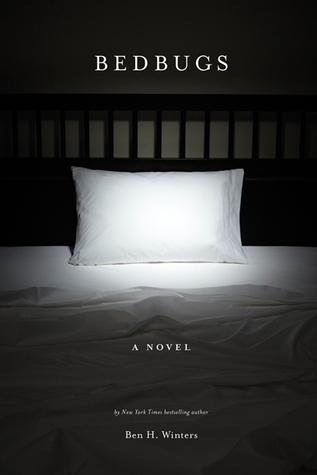
Ben H. Winters, author of the junior high punk rock detective YA book The Secret Life of Ms. Finkleman and the more recent adult horror novel Bedbugs, has probably resigned himself to the fact that he's basically going to be remembered for his novelty mash-up Pride, Prejudice, and Zombies. Oft gifted and rarely read, PPZ was notable for the odd feeling of wasted effort that haunted it. The joke concept at the core of the book was so slim that it was expended the moment one saw the title, making whatever was between the covers pretty much superfluous. In fact, worse than superfluous: The humor of the concept depended on understanding that the proposed fusion would inevitably awkward and fruitless, so the subsequent effort to carry out the plan became somewhat embarrassing and tedious. It's like the old Monty Python gag about the Proust-summarizing contest in which contestants attempt to communicate a comprehensive and lively abridgment of À la recherche du temps perdu using semaphore. The whole joke's right there. The ha-ha's come from an awareness of how ill-suited the proposed combination of medium and content is. The value of semaphore is lost to the length of the task; the value of Proust's work is destroyed by semaphore's low resolution. If you actually had to then sit through several contestants flag-waving their way through all seven volumes of Proust's semi-autobiographical masterpiece, the joke would become murderously dull. The Pythons, comedy masters that they were, only stayed on the joke long enough for the absurdity sink in, and then moved on. PPZ shows no similar insight into the logic of comedy. The experience of actually reading Pride, Prejudice, and Zombies is an experience akin to sitting through a full Proust-summarizing semaphore contest.

Happily for this reader, Winters's new book isn't bridled with the grim task of rendering a clever joke into a humorless novel-length mess. A far more nimble creature, Bedbugs is a slice of retro-influenced middle class real-estate paranoia, in the manner of Amityville or Poltergeist, repackaged as a spook story about satanic bedbugs. I kid you not. Bedbugs from Hell, literally. Using bedbugs as your central nasty is a smart idea that, I'm certain, hundreds of other horror writers - especially in New York - are kicking themselves for having not come up with it earlier. Bedbugs are ready-made horror villains, true examples of just how truly repugnant Mother Nature can let herself get.

Did you know that female bedbugs have no sexual orifice? The male bedbugs swarm the female in mating, stabbing her repeatedly with sharp, knife-like reproductive organs. If she's lucky, one of these bayonet-penises breaks through her exoskeleton at the location of her reproductive organs and fertilizes her eggs. Often, however, in the mad scramble to procreate, the males stab the female anywhere they can reach, filling other organs with their sperm, sometimes to fatal effect. Yeah, I know. That's what I was trying to tell you. An author doesn't even have to make up that part. They're already freakish little nightmares.

For the purposes of a horror story, however, its another, less Rabelais-by-way-of-American Psycho trait that makes bedbugs so attractive as the focus of a horror story. Bedbugs can be strangely hyper-selective. Even if a couple share an infested bed, it isn't unusual for just one partner to be turned into a blood buffet for the bedbugs while the other partner sleeps soundly, untouched. In real life, this causes all sorts of strain and weirdness among the families that get infected. One partner starts getting phobic about the beds and couches, they can't sleep, they get paranoid and can be found searching the bed frames at weird hours of the night. The other can't do anything but sympathize and suppress ever growing frustration. It's your basic haunted house rising-action dynamic: primary victim keeps experiencing things; they're experiences are ignored; what slim evidence there is reinterpreted by others; and people try to be sympathetic, but they really think that the victim is simply losing their marbles.

That classic formula provides gives us the framework of the first half of Bedbugs. The Brooklyniest couple that ever juggled their creative impulses with the need for middle class security moves into a new brownstone duplex in the Brooklynest Brooklyn of all Brooklyns imaginable. (Winters's efforts to situate his narrative in post-collapse Cobble Hill are nearly manic - odd pile-ups of stereotypes, place names, and brand references - and never resolve whether they're meant as reportage or satire. I'm not sure this is the fault of Mr. Winters, himself a Bostonian. Any description of parental culture in modern Brooklyn necessarily straddles the line between reportage and satire.) Before you can say "orgy of bayonet-like bedbug penises," the book's lead, former legal industry drone turned housewife and painter, finds herself falling to a plague of bedbugs who, though they are leaving bites all over her skin, can't be seen. As the book progresses, the attacks get worse and worse, but there's never any sign of the bugs. Is she crazy? (Prolly not.) Or is she under siege by demonic, supernatural bedbugs? (Now we're talking!)

Perfectly timed as summer reading, Bedbugs fuses easy humor with campy mommy-horror and the occasionally grotesque set piece. It's a bit slow to start. I imagine Winters meant this as an allusion to the deliberate pacing of '70s domestic horror, but Winters never really strives for the (mostly unmerited) gravitas of the previous works, so the result is something of a drag, as what is meant to be horror must coast on the goodwill the author builds up with his good-natured ribbing of Brooklyn. Overall, it's a likeable diversion and worth the pick-up for genre fans seeking lighter fare.

That said, publishers Quirk are doing nobody any favors with their slipshod editing of the work. I've been told that basic copyediting is no longer a function editorial house bother themselves with. The incredible number of typos and correctly-spelled but misplaced terms ("she folded the strolled") suggests this rumor is true. Setting that aside as a lost cause, editors still should have encouraged Winters to tighten up his game: his use of generic placeholder terms where precise vocabulary and description could easily be used - for example, at one point a character buys "a thing of sausage;" a package? a pound? a link? what? - regularly crosses the line from vernacular to simple laziness. Demand better, editors: that's your job. The authors will, eventually, thank you for it.

Saturday, February 12, 2011

Books: Bizarre art-by-the-pound stately pleasure dome.

About three-fourths of the way into Mat Johnson's new novel, Pym, we meet a hack landscape painter, unapologetically modeled on the master of mall art Thomas Kinkade, who, after adopting an apocalyptic millennial strain of Tea Party ideology, uses the massive profits from his schlock empire of oddly illuminated landscapes to create a self-contained biosphere hidden in the icy wastes of Antarctica. There he lives with his wife – a perpetually peeved housewife who secretly grows and smokes pot in the biodome as a tactic in a losing war against boredom and domestic disenchantment – trying to perfect the internal landscape of his arctic layer, quixotically wrestling with his purchased reality in an impossible effort to impose his saccharine aesthetic on the world around him. Eventually this artist will be required to take up arms to defend his bizarre art-by-the-pound stately pleasure dome against an invading army of abominable snowmen. And women. And children.

And that doesn't even rank as the weirdest thing in the book. In fact, I don't know that I would even put that up in the top ten.

The log line on Pym is simple. A recently canned African American lit prof finds the journal of Dirk Peters, a supporting character in Edgar Allan Poe's maddeningly eccentric novel The Narrative of Arthur Gordon Pym of Nantucket, which proves that (with some minor liberties) Poe's tale was essentially a true story. In Poe's work, there appears a tribe of black arctic natives (so black that even their teeth are black) that, the ex-professor reasons, must still exist: a black society never touched by the colonialism, slavery, and exploitation that has been the curse of the native African population and its diaspora. Though a series of unlikely connections, an all-African American exploratory crew, led by the professor and following Poe's novel and Peters' journal, sets out to find this lost world of blackness.

And it goes all to hell.

Poe's original Narrative is a grand mess of a book. Characters appear and disappear, the plot regularly flirts with incomprehensibility, and the ending of the book is so abrupt and provocatively illogical and unsatisfying that it is, perhaps justly, widely ignored by the reading public. Those that do read it are often compelled to impose a scrim of explanatory order on it. If you're Herman Melville, Jules Verne or H. P. Lovecraft, you basically rewrite the thing. Melville, who unlike Poe had actual experience with life at sea, stripped everything he thought was nonsense out of the book and recycled what was left into Moby-Dick. Verne and Lovecraft created works, The Sphinx of the Ice Field and "Mountains of Madness" respectively, that defused the work and placed it comfortably within the realm of their own creative endeavors (which is a fascinating case study in the anxiety of influence, as Verne's optimistic humanism and Lovecraft's darkly smoldering nihilism couldn't be further apart; it's as if both author's needed to complete Arthur Gordon Pym in a way that would make Poe their spiritual father, but ended up making two Poe's). Lesser readers often claim, erroneously, that the novel is unfinished. When I first read it, approximately a bazillion years ago, in a Penguin paperback edition – yellow color bar on the spine, Penguin's way of denoting "American literature," as opposed to red, green, or purple (English, Middle East and Asia, and "the Ancients," in order) – from the local library (long since plowed over to make way for an "urban center" of upscale markets and chain restaurants, I'm told), the back cover copy actually stated that the novel was Poe's great unfinished novel. It was more than a decade before I found out I'd read the ending wrong: it’s not an unfortunate cut off, but the most deliberate middle finger ever extended towards the reader in all American literature.

But I digress.

I bring up Verne and Lovecraft because this admittedly limited sample (and we could throw Melville in here too and the conclusion, which you have not yet read, will hold) shows that, in the game of being influenced by Poe's Narrative, the winner is the dude who goes the most afield from Poe's original work. Verne set out to write a work-specific sequel and his novel is rightly forgotten. "Mountains of Madness," on the other hand, requires no knowledge that it is basically a sequel to Poe's Narrative and is justly considered one of the key texts in Lovecraft's body of work.

Johnson gets the Pym Principle: You've got to betray the influence to make it work for you. With it's overly quirky cast, it's pulpy narrative drive, and it unembarrassed willingness to discuss it's own themes and make the subtext the text, Johnson's Pym doesn't resemble Poe, but rather Vonnegut. Pym's a burlesque horror/satire/adventure/pomo scramble that manages, somehow, to simultaneously never take itself to serious and never treat itself like a joke. The result is an examination of America's perennial obsession racial identity played as if it were a boy's adventure novel.

Well worth the price of admission.

Spiegel and Grau (if that means anything to ya') put up for this party. It's in hardback now and will set you back 24 Washgintons. You could wait for the trade paperback, but that's basically like announcing to the world, "Yeah, a vibrant literary culture of switched-on readers and authors that produce interesting work isn't worth ten bucks to me."

Friday, February 04, 2011

Books: Sure it's the end of life as we know it, but it didn't cost a dime.

From the point of view of a vampire, the zombie holocaust would look like a human version of a global mad cow disease outbreak or, perhaps, something along the lines of current climate change thinking: it's a threat, but the majority of us don't really feel threatened yet, and there are too many short term incentives for too many of us to avoid rallying around such an abstract cause.

This is the premise of "The Extinction Parade," a free online story by Max Brooks, author of World War Z.

That's right, free as in "no money." Yeah, I know! Right?!?!

Saturday, January 29, 2011

Guest blogger: Books: The Last Werewolf

Guest blogger Jessica is married to CRWM, but does not consider herself a "horror person". She owns an independent bookstore in Brooklyn, and sometimes her reading interests overlap with the interests of this blog. She is writing this herself, so please forgive the snarkiness with which she disguises her deep adoration for her clever and handsome husband.

Glen Duncan's The Last Werewolf was one of the hot galleys at Winter Institute, an annual gathering of independent booksellers and publishers that has started to become one of the places where a book can get "made." Among my fellow booksellers, it is commonly referred to "the sexy werewolf book." I met the author briefly at a reception -- he is the civilized and self-deprecating Brit you might expect, despite the hair.

This is terrible, but I have to say... I devoured this book (cringe). I read it on cold street corners and in subways and bars and kept trying to tell CRWM about the plot points. The novel is obscenely well-written and brilliantly sexy (and vice versa -- very few pages go by without mention of the narrating werewolf's sexual organs. Apparently sex is what sets them apart from the more coldblooded/pansyish immortals, the vampires). Reading Duncan felt a little like discovering Anne Rice for the first time -- only with more energy, more irony, and a dry British sense of humor that makes the absurdities of lycanthropy into a cosmic existential joke instead of a teen fantasy.

The detailed pleasures of the fantasy/horror genre are there in spades (the logistics of the transformation, the luxuries of immortality, the glimpses of werewolf culture and their conflicts with both vampires and a more sinister, corporate version of the BPRD). That's balanced, though, with an achingly believable love story and a self-loathing descent to extinction which turns into a fierce fight for life (not unrelated).

If this doesn't give werewolves an equal literary standing with vampires, I can only assume some sort of conspiracy is at work. Also, it made me crave cigarettes, good wine, and mellow whiskey, consumed in posh surroundings with an air of world-weary appreciation. When it comes out in July I highly recommend you snap it up -- and keep an eye out for the undead side-taking that is sure to follow.

Saturday, November 06, 2010

Books: "And right away, I was scared. We were all scared."

In his new book, The Lampshade, journalist Mark Jacobson investigates the origins of lampshade made out of human skin: a lampshade that was purchased for $35 at a yard sale in New Orleans and may be one of the infamous lampshades that Ilsa Koch (inspiration for Ilsa: She-Wolf of the SS) allegedly constructed for her husband out of the skin of Jews slain in Buchenwald. The majority of Jacobson's investigation focuses on the possibility that this grisly artifact was a product of the Holocaust, but he also investigates the possibility that it might be a native product of New Orleans voodoo culture. From gallery owner and "biological and transgressive" artist - meaning he makes art out of biological matter, including parts of humans left over from medical dissections and autopsies - Andy Antippas, Jacobson learns about the Ekoi, "a warlike culture from Nigeria known for painting large, flowery murals and making giant masks, often from human skin."

Armed with slender lead, Jacobson searches database of the Afro-Louisiana History and Genealogy Project, which contains digital records of the French slavers that trafficked Africans through the bustling slave auctions of Louisiana from 1719 to 1820. He finds a record of just two Ekoi slaves sold at auction in New Orleans. One, a woman named Felix, was sold for $430 in 1792. The extensive records the French slavers kept contained the following comment on the sale: "Woman is pregnant."

Oddly, the name links with a story Jacobson heard from New Orleans music legend Dr. John. According to the good doctor, a Creole regular at the Saturn bar was a voodoo practitioner of sorts and he was well-known for making masks out of human skin. "Slip them right over your head, " Dr. John tells Jacobson. "Give yourself a whole new face." This strange character's name is, curiously enough, Cheeky Felix.

Could Cheeky Felix be the great-times-ten grandson of the slave woman Felix? Was there some bizarre family tradition of Ekoi flesh-mask making that was passed down from generation to generation for nearly three centuries? Jacobson's curious, if not totally sold, and he attempts to find Cheeky Felix. Dr. John tells him that the Neville brothers - yeah, believe it or not, the Neville "the Meters" brothers - might know where Cheeky Felix is.

This turns out to be a dead end for Jacboson. The Neville brothers are apparently not big flesh-mask types. But Jacobson's interview, in which the brothers Neville discuss New Orleans urban legends and the strange role horror cinema played in segregated New Orleans, leads to a surreal appearance by ANTSS's favorite monster: the Gill-man from the Black Lagoon. Here's Jacobson:

I gave Cyril the short version of the lampshade story and he was interested but again insisted that he had little to add. "Well," he finally allowed, "there was the Gown Man. If our mother wanted to keep us home, she'd tell us about the Gown Man. He was this big white guy in a hospital gown, and he'd snatch you off the street, put you under his arm, and take you over to the dissection room at Tulane University medical school. They'd pull of your skin and you'd get chopped up by medical students, practicing their autopsies."

"They had the Needle Man, too. Supposed to shove a six-inch needle in your eye, suck your brain right out from the socket," Aaron Neville chimed in.

Showtime was approaching and Cyril looked about ready to say good-bye when he said, "There is this one thing. Don't know if it helps you or not, but when we were kids our parents used to send us to this Boy Scout camp y the Lake. We'd play ball and that, but on Wednesdays we went to the movies because that's the day they set aside for black people to go to the movies.

"They always showed these horror movies, like Attack of the Crab People. Creature from the Black Lagoon. The usual shit, trying to scare us, but the movies were so corny, we'd just laugh. Then there was this one time the movie came on and you could tell from the first second this wasn't going to be the same old thing. The film was all messed-up-looking, with these scratches in it. At first you didn't see anything. It looked overexposed. Then you saw these people coming out of what looked like a giant hole. These skinny, skinny people, their eyes sunk deep inside their head. They were wearing what looked like striped pajamas. They showed these dead bodies, stacked up. And right away, I was scared. We were all scared. Because we knew this wasn't something fake. It was real. Remember that Aaron?"

He nodded.

"Then they had these other people, marching by. And I think I saw that thing you're talking about - a lampshade they said was made of human skin. That was really scary."

"You're talking about footage from Buchenwald. The Buchenwald concentration camp," I said.

"Some concentration camp, that was for sure," Cyril answered. "Long as I live I'll never forget those pictures. Give me the chills thinking about it even now. Because there are two things about seeing that movie that have always stayed with me.

"First of all, I couldn't believe white people would do that to other white people. But even more than that was the question about why they picked that particular Wednesday to show that particular movie to us - the kind of message they were trying to send."

Saturday, October 16, 2010

Books: The Age of Tired Monsters?

In a recent interview about his new book, Kraken, China Miéville, Marxist economist and New Weird pioneer, discusses what he believes is the state of monster creation in the early 21st Century. Here's the relevant section of the interview:

BS: One of the things I wanted to ask you about is the talk you did at a Marxist conference called ‘Marxism and Monsters’?

CM: Oh yeah, God.

BS: Because I was obsessed with that talk for ages, and my comrades and stuff we always talk about it. So you talk about these origins of monsters, and the socioeconomic origins, and then I was thinking – nowadays we don’t really invent new monsters, we kinda riff off old monsters like vampires and zombies, we use them over and over again. I wanted to know whether you thought we’d exhausted our ability to create monsters or is there a reason today’s society doesn’t really invent monsters like we used to?

CM: I’m not sure I’d agree, I mean, I think there’s two different levels. On the one hand there’s this kind of endless degraded reiteration of the old tropes, so you get these endless endless endless zombie or vampire films or whatever, but at the same time there is also, I mean particularly within geek culture, that kind of fascination with the monster creation. So, with movies there’s always this thing with like, y’no, ‘did you get to the monster shot?’ ‘Did you see the monster?’ and it’s like ‘what’s it gonna be?’ You remember when Cloverfield came out and everyone was like: ‘what’s the monster going to be like?’ You know, there was all these debates about it. There is still an attempt to create, or self-consciously an attempt to create monsters that haven’t been seen before. Or you think about something like Doctor Who where they’re always trying to come up with the new, y’no – but for me, as you know if you’ve heard the talk, I think the early 20th Century was the high point of absolutely explosive creation in the monstrous. But I would say, at the moment – particularly at the level of vampires and zombies – it’s very tired.

I think probably the ’20s was the anomaly rather than now, I think it was more of a question of that being a particularly fecund time than this being a particularly degraded one. And I think there’s probably more teratological innovation going on now than there was in the 1880s for example. I think it’s very culturally specific and at various moments there’s a kind of upsurge of creativity and others there’s not, so I think at the moment things are roughly sort of in balance, you know - we have a lot of very very tired stuff, there’s still some things that are interesting, but most of the time monsters disappoint. Like Cloverfield when the monster is revealed you’re like, uh. *laughs* And that’s a separate issue. But as to the social reasons, why there is such an obsession with sparkly vampires, or whatever it might be, I mean that’s a whole other question – then you have to get into the specifics of each case. And these things are very fashion driven, so, angels are something they’re trying to do at the moment. Angels are very trendy. So overall I think this day and age is kind of middling, in terms of monster creation.

Friday, September 24, 2010

Books: Gay for Johnny Depp?


In 1991, a year after Edward Scissorhands first brought the director/actor team together, Tim Burton wrote this poem about Johnny Depp. Click to embiggen and read. The poem originally appeared in Roddy McDowell's Double Exposure, Take Three.

Sunday, September 19, 2010

Books: Reheated leftovers?

Dexter is Delicious, the fifth installment in Jeff Lindsay's series about a serial killer who hunts killers, pits the titular protag against a Goth cult of cannibals who have kidnapped, and are threatening to make long pig out of, two school-aged girls from one of Miami's elite private academies. This new installment is a solid entry in the series, but the strain of developing Dexter - a character who is defined primarily by the twin poles of his lack of emotion and his Big Secret - is starting to put visible strain on the narrative.

Ironically, Dex's third outing, widely panned for its profoundly regrettable side-trip into supernaturalism, may have turned out to be the best thing to ever happen to the series. At this point, Lindsay would have to turn out a pretty dismal book to not land a title above the bar of "worst Dexter ever." Though that's probably unnecessarily harsh: Dexter is Delicious contains all the elements that have made Lindsay's series an unlikely hit and there's nothing to suggest that Lindsay phoned it in or that it won't be happily welcomed by series fans. To clarify the television continuity from the novel series - the two are, at this point, almost entirely unrelated - the new novel finds Dexter the paterfamilias of a curiously functional/dysfunctional family. He's married Rita and become the stepfather of Aster and Cody: both of whom are larval stage serial killers, brutalized by the behavior of their biological father and looking to Dexter to pass along the vigilante code he lives by. (It is a curious conceit of the series that being a serial killer is sort of like being a mutant in the Marvel sense of the term: it gives you heightened senses, allows you to detect other serial killers, and other odd powers.) Dex's sister, a coworker at the Miami PD who is in the know about his extracurricular activities, increasingly relies on Dexter's extralegal capacities. And, in and odd twist, Dexter's biological brother, the baddy from the first book in the series, is back to make amends and help train Aster and Cody in the ways of serial murder. Only Rita, Dexter's wife, and the rest of his coworkers don't know (and a couple of the latter suspect something's up). All of this is complicated by the fact that Dex, after the birth of his first child, has sworn off the whole serial killer thing.

Fans of the Dexter series will find plenty to like here. Dexter's bemusedly sarcastic narrative is awkwardly charming. Lindsay transforms his baddies from pathetic to creepy with pleasing proficiency. The absurdist sensibility that situates the Dexter series firmly in crime-comedy subgenre of Florida crime writing is on fully display. The plotting of the actually mystery is straight-forawrd in that post-Spillane the-answer-happens-to-the-protag way.

If it delivers on the goods, why does the new Dex leave me feeling indifferent? The problems stem from the increasing inefficiency of the series. I don't want to accuse Lindsay of taking cues from the Showtimes series, but Lindsay has seemingly chosen to develop his character on the same track: making the struggle between Dexter's homicidal impulses and his role as family man the nexus of the series drama. The television series, which has never fully bought into the idea of Dex's psychopathy and has always emphasized the development of character, has made this the center of their show. By contrast, Dexter's unredeemed psychopathy was a strength of book series. It primary benefit was that it helped situate Dex, the narrator, in narrative position of the classic detective. Because Dexter didn't care about his past or his future, he behaved in the oddly impersonal and eccentric manner of any classic detective. Like Poirot or Nero Wolfe, he existed mainly to get involved in mysteries and solve them. There was, despite the bizarre context, a classicism to the early Dexter books that was a real treat for the reader. This narrative efficiency has become increasingly lost as the narrative has soap-operaed out. Second, the gleeful nihilism of the series has been replaced with a drive to build an inner emotional life for the main character. One of the chief pleasures of the early series was Dexter's chipper, yet inhuman voice. This was a character who, when strapped to a vivisection table, would express a giddy curiosity about what what about to happen to him. His inhumanity was the primary source of the early books' satire: the distance Dexter felt from his fellow humans made them charmingly absurd. With the evolution of Dexter, suburban daddy, this voice has gone from absurdist to petty. Dex no longer marvels at the seemingly suicidal antics of Miami drivers. Instead, he worries about speeders threatening his child. He's gone from amoral dissector (literally and figuratively) to a walking "Baby on Board" sticker. Such a development is not welcome.

You got sympathize with Lindsay: he has not made it easy on himself. When the televised Dexter threatened to overshadow him, he made a bold move in a direction that series wouldn't ponder. And he got spanked for it. Unfortunately, to go in the direction of the TV series is to suck the petrol right out of what made the series great, its weirdly amoral ability to romp through the worst behavior humans could offer up. This latest book is a perfectly serviceable holding maneuver, but it leaves me feeling inert. The future of the series depends on recapturing some of that old magic.

Sunday, July 11, 2010

Books: Harper Lee and Tod Browning.

Today is the 50th anniversary of the publication of the classic novel - one of the many claimants for the title "The Great American Novel" - To Kill a Mockingbird. Since this is a horror blog, I'm not going to dwell on the novel's concise vivisection of class and race mores in the South or it's brilliant, ironic use of a child's perspective to create a classic American mock epic satire (the mock epic is the essential American comedy mode, and something which the WSJ is apparently unfamiliar with).

Instead, I'm going to focus on the cameo Tod Browning's 1931 classic make is in the book. In the first chapter, Lee introduces Charles Baker "Dill" Harris. On first meeting Scout, the novel's six-year-old narrator, and her old brother Jem, Dill (allegedly based on the youthful Truman Capote) discusses a horror classic:

Dill was from Meridian, Mississippi, was spending the summer with his aunt, Miss Rachel, and would be spending every summer in Maycomb from now on. His family was from Maycomb County originally, his mother worked for a photographer in Meridian, had entered his picture in a Beautiful Child contest and won five dollars. She gave the money to Dill, who went to the picture show twenty times on it

"Don't have any picture shows here, except Jesus ones in the courthouse sometimes," said Jem. "Ever see anything good?"

Dill had seen
Dracula, a revelation that moved Jem to eye him with the beginning of respect. "Tell it to us," he said.

Dill was a curiosity. He wore blue linen shorts that buttoned to his shirt, his hair was snow white and stuck to his head like duck-fluff; he was a year my senior but I towered over him. As he told us the old tale his blue eyes would lighten and darken; his laugh was sudden and happy; he habitually pulled at a cowlick in the center of his forehead.

When Dill reduced Dracula to dust, and Jem said the show sounded better than the book . . .


Here's the question to debate: In the film, Dracula is not reduced to dust at the end. Is Lee misremembering? Is Dill Capote misremembering? Or is Dill making up a story based on what he's heard of the film and book in order to impress Jem and Scout?

Have some Lane Cake and celebrate an American classic.

Thursday, June 03, 2010

Contest: Leave nothing but smoking rubble in your wake!

Last day to get in on the action! I'm giving away one brand new copy of Killer Kaiju Monsters, a richly illustrated homage to all things big, Asian, and stompy by Ivan Vartanian. To enter the contest, just click through to the original contest post and leave a comment telling me what city you would stomp if you were a giant monster and why. There's plenty of unstomped real estate left. A winner will be selected at random tomorrow.

Kaiju-Fink art by McNail.

Wednesday, June 02, 2010

Books: The novel as zombie.


Mark McGurl takes a look at the bumper crop of zombie books in n + 1 and comes up with a novel thesis: Zombies novels are so hot right now because the novel itself is now an undead genre.

To say that the novel is a zombie genre is therefore not only to say that it may have outlived its life as a key cultural form, animated now only by its connections to film and television on the one hand, the university on the other. It is also to say something about what has often been taken, most recently by Benjamin Kunkel in an essay in Dissent, as the novel’s chief claim to our attention and respect and even political hope. This is its capacity for the creation of deep, psychologically complex fictional characters, the kind we find at the center of realist novels like Pride and Prejudice. Their “roundness” makes space for our fondest hopes for humanity, that it might stop and reflect and set a course for a better world. To the extent that these characters continue to appear in contemporary fiction, do they succeed in killing the crowd of zombies gnawing at the metaphorical door?

The essay focus's almost entirely on the canon of American zombie film and literature (I think Shaun of the Dead might be the only non-US production mentioned), but McGurl manages to get quite a bit of stuff out of the relatively slim sample. First he zeros in on the idea of the "zombie" as a character in a very specific genre sense:

Zombies are “characters” in the sense recently revived by the critic Aaron Kunin—they are a type whose existence extends beyond any one work or even medium. This is why we can speak of “the zombie” in the first place, and why the specter of the ludicrous hovers even over the realist commitment to character. In his book on laughter Henri Bergson observes, “In one sense it might be said that all character is comic, provided we mean by character the ready-made element in our personality, that mechanical element which resembles a piece of clockwork wound up once for all and capable of working automatically. It is, if you will, that which causes us to imitate ourselves.” When “clockwork” characters show up in popular genre fiction, as they so often do, critics are apt to take them as an aesthetic offense to the human. It might be more accurate to say that our aesthetic displeasure in hackneyed types records our confrontation with a truth about the human we would rather deny, but which the zombie brings to the fore. As a kind of character, then, the zombie is a pure negation of the concept of character at the heart of Austen’s realism.

From there he goes on to discuss how the absence of anything like traditional characterization basically forces us to treat zombies as allegories.

So: Zombies are anti-characters, but they do make for good allegories, their very flatness propelling us into speculation about what they might mean “on another level.” Since one thing they mean on that other level would seem to be “flatness” itself, it will not do to criticize zombies for being stiff and uninteresting, as allegorical characters have been for at least a few hundred years . . . [Allegory's] intellectual virtues are too essential to be dissolved into realism and that its most vivid modern manifestations are to be found in genre fiction. Above all, in a way that realism rarely does, allegory gives us a kind of vivid speculative access to the superhuman designs, whether spiritual or natural, that structure consciousness from without. This is especially true of science fiction and horror. These designs may constitute the ultimate reality, in comparison to which ordinary experience is only a kind of dream, but when they are rotated into the space of representation they can look very “unrealistic” indeed. Their realism is what we might call a speculative realism.

Before he finally comes to the punchline:

Once upon a time the designs of allegory were understood by direct reference to theology, and more than a hint of end-of-days religiosity remains in recent evocations of the otherwise secular zombie “apocalypse.” Cormac McCarthy’s The Road is the best known and certainly the classiest example, trading up from the zombie to realistic-seeming depictions of postnuclear cannibals who want to eat a suspiciously Jesus-like boy. But look closely, notes Fletcher, and you will see that modernity brings about a basic reversal in the direction that allegory now tends to move. What used to take us higher toward celestial structures now takes us downward to the physical truths that determine our organic being and give it a hard deadline. McCarthy’s high seriousness as a writer has always coincided with a certain attraction to genre—in his case the western—but in a way the “badness” of actual genre fiction, the kind that never wins big literary awards, is a more authentic expression of our lowly, pulpy state. Real zombie stories are more honest about our essential stupidity than works like The Road, drowning out the last yelps of human pride in the tide of their own mediocrity.

I love that last line.

Which brings up this only semi-related issue. I found the image that kicks off this post GISing for some suitably zombificated imagery to use as an illustration. How f'ed up is that image? Sometimes I feel like the zombie holocaust just can't come fast enough.

DON'T STOMP THINKING ABOUT TOMORROW! If you haven't entered ANTSS Killer Kaiju contest yet, you freakin' should! It's as easy as stomping on your favorite scale-model city.

Monday, May 31, 2010

Stuff: The Jess List

In my review of I Sell the Dead, I mentioned that my wife generally hates horror films. When she doesn't find them boring, she finds them unpleasant. For her, watching horror is like sitting in a dentist's waiting room: uncomfortable, dull, occasionally punctuated by anxiety-inducing screams. During this explanation, I mentioned that there was a short list of flicks that passed the Jess Test. Though I meant this in an abstract sort of way, a couple of readers asked what films were on this list. So, I asked my wife to write up a list of genre treats that she actually does like. Not all of the works on the Jess List are, perhaps, horror-proper, but they're all what Jess talks about when she talks about horror.

Without further ado, I present to you the unedited, unabridged Jess List, straight from the woman herself:

Shaun of the Dead
The Frighteners
Ghostbusters
Jaws (but I hate the first shark scene)
I Sell the Dead
Bubba Ho-Tep
Hellboy 1 & 2
Army of Darkness
Land of the Dead
Universal Monsters: Creature of the Black Lagoon, Dracula, Frankenstein (Wolfman is a little lame)
The Thing from Another Planet + remake The Thing (but I have to squint at some parts)
Kaiju movies (Godzilla et al)
Interview with the Vampire (the first R-rated movie I ever saw in high school)
Rear Window (favorite Hitchcock)
Topper (with Cary Grant as 1/2 of hedonistic ghostly couple)
The Legend of Sleepy Hollow (Disney version; this totally scared me as a kid but is now delicious.)


Jess NOT list (my least favorites):
These are not necessarily bad art. The fact that they linger in memory and come up in conversation indicates that they are in fact especially powerful. But they haunt me in ways I find entirely unpleasant. I have lost nights of sleep to these films, which I begrudge.
The Ring
Texas Chainsaw Massacre
Hitchcock's Frenzy
Seven
book: Monster Island by David Wellington (zombie novel, too scary to finish)


TV shows:
Buffy (just the first season; I checked out pretty much after Angel went bad)
Dexter

Books:
Sharp Teeth by Toby Barlow
Magic for Beginners by Kelly Link (practitioner of "the new weird")
American Gods & Anansi Boys by Neil Gaiman
Johannes Cabal, Necromancer & Johannes Cabal, Detective


Comics:
Sandman (mixed, sometimes nightmare inducing)
House of Mystery by (Fables creators) Bill Willingham & Mike Sturges
Hellboy & BPRD by Mike Mignola

DON'T STOMP THINKING ABOUT TOMORROW! If you haven't entered ANTSS Killer Kaiju contest yet, you freakin' should! It's as easy as stomping on your favorite scale-model city.

Monday, May 24, 2010

Books: The lion, the witch, and the uncanny.

I owe this find to my wife, who hipped me to this passage. Below, C. S. Lewis discusses the difference between fear, which he sees as an apprehension of danger, and dread, which he equates with the uncanny and a religious concept of the Numinous.

Aside from being an unexpected, but lucid voice in the on-going discussion about the varieties of horror, I also find Lewis's insights interesting for calling into question the common "just so" story that horror, as we now conceive of the emotion that fuels of genre entertainments, has some clear lineage to the psychological lives of ancient ancestors. While he doesn't doubt that our ancestors lived in demon-haunted worlds, he raises the question of whether one could conceive of supernatural forces when one hadn't conceived of a "natural" world. If everything is supernatural, isn't that your natural? And, if that's so, is the uncanny a fear of relatively recent vintage (in terms of the hundreds of thousands of years of human evolution)?

Here's Lewis from his The Problem of Pain:

Suppose you were told there was a tiger in the next room: you would know that you were in danger and would probably feel fear. But if you were told ‘There is a ghost in the next room’, and believed it, you would feel, indeed, what is often called fear, but of a different kind. It would not be based on the knowledge of danger, for no one is primarily afraid of what a ghost may do to him, but of the mere fact that it is a ghost. It is ‘uncanny’ rather than dangerous, and the special kind of fear it excites may be called Dread. With the Uncanny one has reached the fringes of the Numinous. Now suppose that you were told simply ‘There is a mighty spirit in the room’, and believed it. Your feelings would then be even less like the mere fear of danger: but the disturbance would be profound. You would feel wonder and a certain shrinking—a sense of inadequacy to cope with such a visitant and of prostration before it—an emotion which might be expressed in Shakespeare’s words ‘Under it my genius is rebuked’. This feeling may be described as awe, and the object which excites it as the Numinous.

Now nothing is more certain than that man, from a very early period, began to believe that the universe was haunted by spirits. Professor Otto [I have no idea who Otto is – CRwM] perhaps assumes too easily that from the very first such spirits were regarded with numinous awe. This is impossible to prove for the very good reason that utterances expressing awe of the Numinous and utterances expressing mere fear of danger may use identical language—as we can still say that we are ‘afraid’ of a ghost or ‘afraid’ of a rise in prices. It is there- fore theoretically possible that there was a time when men regarded these spirits simply as dangerous and felt towards them just as they felt towards tigers.

. . .

Now this awe is not the result of an inference from the visible universe. There is no possibility of arguing from mere danger to the uncanny, still less to the fully Numinous. You may say that it seems to you very natural that early man, being surrounded by real dangers, and therefore frightened, should invent the uncanny and the Numinous. In a sense it is, but let us understand what we mean. You feel it to be natural because, sharing human nature with your remote ancestors, you can imagine yourself reacting to perilous solitudes in the same way; and this reaction is indeed ‘natural’ in the sense of being in accord with human nature. But it is not in the least ‘natural’ in the sense that the idea of the uncanny or the Numinous is already contained in the idea of the dangerous, or that any perception of danger or any dislike of the wounds and death which it may entail could give the slightest conception of ghostly dread or numinous awe to an intelligence which did not already understand them. When man passes from physical fear to dread and awe, he makes a sheer jump, and apprehends something which could never be given, as danger is, by the physical facts and logical deductions from them. Most attempts to explain the Numinous presuppose the thing to be explained—as when anthropologists derive it from fear of the dead, without explaining why dead men (assuredly the least dangerous kind of men) should have attracted this peculiar feeling. Against all such attempts we must insist that dread and awe are in a different dimension from fear.

Wednesday, May 12, 2010

Stuff: Sympathy for the poor devil.

Over at the Frontal Cortex blog, Jonah Lehrer discusses the insights psychopaths give us into moral behavior. His takeaway is that morality is an emotional, rather than a rational, response to the world around us. His argument rests on the fact that psychopaths "seem to have perfectly functioning minds. Their working memory isn't impaired, they have excellent language skills, and they don't have reduced attention spans. In fact, a few studies have found that psychopaths have above-average IQs and reasoning abilities; their logic is impeccable." The problem is that their emotional reactions are stunted or nonexistent. Which leads us to the part that gets interesting for horror fanciers:

When normal people are shown staged videos of strangers being subjected to a powerful electrical shock or other painful stimulus, they automatically generate a visceral emotional reaction. Their hands start to sweat, and their blood pressure surges. But psychopaths feel nothing. It's as if they were watching a blank screen. Most people react differently to emotionally charged verbs like kill or rape than to neutral words like sit or walk, but not psychopaths. The words all seem equivalent. When criminologists looked at the most violent wife batterers, they discovered that, as the men became more and more aggressive, their blood pressure and pulse actually dropped. The acts of violence had a calming effect.

So, despite the conventional wisdom assumption that psychopaths would show an obsessive interest in media violence – think of Patrick Bateman's use of Texas Chainsaw Massacre as porn – the research suggests otherwise: Horrific images bore psychos.

This reminds me of an assertion made by horror writer Joe Hill that the defining characteristic of horror was sympathy. In his Heart-Shaped Box his smuggles in something of a manifesto: "Horror was rooted in sympathy, after all, in understanding what it would be like to suffer the worst."

Perhaps psychopaths reveal something fundamental about the sensation of horror. One of the traditional knots of horror fandom is how one should divide the horror experiences into a taxonomy. The explicit versus the implicit, terror versus horror, the uncanny versus the possible, and so on. But, the odd immunity of psychopaths to horrific imagery might suggest a common, more primal connection. Perhaps, no matter how you slice it, all horror, regardless of final affect, starts with a moral sympathy. Before you can anticipate the terrible or revolt at the image of the horrible laid bare, you have to be able to create a connection between the suffering or threatened other and yourself. That link is a prerequisite act of sympathy.

Thoughts?

Saturday, April 24, 2010

Books: Dogs of varying ages attempt to learn tricks of diverse vintage.


The origin-story of Peter Straub's latest novel, A Dark Matter, can be profitably compared to the origin story of Stephen King's latest novel, The Dome.

King's "new" book is actual a manuscript from the '70s that he decided to dust off, unaware that its basic premise was the central gag of The Simpsons Movie. Despite King's interest in format exploration (from the serial publication of The Green Mile to pioneer efforts at electronic publishing), there's something telling that he's pushing 30-year-old work out now, and that sits just fine with everybody. It seems appropriate, fitting even for an author who famously revisited his own masterworks again and again, who dredged up his early career nom de plume to produce a work two decades later.

By contrast, Straub's new novel owes a debt to the work of Brian Evenson, a genre warping author whose sadly under-recognized work sits at the weird intersection of pulp and experimental art. And I don't mean this in some "I saw some similarities" clever critic way: Straub's introduction not only thanks Evenson for the inspiration, but mentions that one specific scene in the novel is modeled off a scene in Evenson's own The Open Curtain.

When King needs inspiration, he looks back. When Straub needs inspiration he finds it in the work of a guy who not only wrote one of the definitive texts on the mindbending prose of Robert Coover, but who also contributed a story to a collection of stories that takes place in the Halo game universe.

This is not to say that one approach is necessarily better than the other. In fact, there's a sort of quality assurance that comes with King's approach. Like a top level athlete, King has perfected his performance in a highly specific and limited field. The pleasure of King is the pleasure of knowing that you're in the hands of a master, and that mastery is predicated on the idea of him doing the very thing he's mastered. When I was young, I remember people who weren't particularly into boxing making jokes about how upset they would be if they bought the pay-per-view Tyson fight and Tyson ended it in a minute and some change. But these were the folks who never bought in to a fight. The people who paid to see Tyson do his thing never complained. That was the point of seeing Tyson. Reading King's like that.

Straub's something different. The pleasure of reading Straub is the pleasure of watching a master restlessly push himself to find the limits of his own talent. Straub's interest in the New Weird, that liminal genre of fantasy and postmodern lit, which Straub dubbed "the New Horror" in a recent anthology he edited, has kept him on the vanguard of his chosen field, but that comes with a price. King's like early career Tyson: the result is rarely in doubt. Struab's newest work is more like a tightrope act. It requires skill and training and the careful dexterity of a master, but it still courts disaster. And whatever the outcome, it's interesting.

I wish I could say that A Dark Matter was a triumph, but it's more interesting than successful.

Yet another autopsy of the '60s, A Dark Matter plays with shades of understanding. It's a tragedy about the inability to communicate wearing the Halloween mask of a horror novel. At its core is story of a group of friends who, in their youth, were pulled into the orbit of a somewhat sinister, but mostly pathetic guru. Their cult of personality disintegrated when a black magic ritual when awry and one of their number died in the process. The novel follows the one friend who didn't attend the ceremony - now an adult who made his fame and fortune writing a thinly veiled fictional treatment of the event - as he tries to piece together what actually happened that day.

The curious thing about A Dark Matter is that is isn't exactly Rashmon-like: Nobody disagrees about the most significant details of the event, so the event in question is never really a mystery. (To be fair, Rashmon isn't very Rashmon-like either - like the term "Kafkaesque," which is used when things are Orwellean, the adjectival form of the proper noun has proved more useful in day-to-day conversation and has long since overwhelmed the details of the real; which is, perhaps, the most Rashmon-like thing about Rashmon.) The result is a spiral narrative structure. With each retelling, the events of the disastrous ceremony are fleshed out and told with greater nuance or given a slightly different spin. The pattern is pleasurable, but the major downside is that there's no dramatic tension. We know, from the start, who survived, what happened, and who paid for it. It's a novel that begins by telling you exactly how it all ends.

The spiral structure of A Dark Matter is a bold move. It basically throws down the gauntlet. It disarms the most obvious and powerful weapon a genre writer's got in his arsenal: plot. Sadly, it's a bold move that Straub can't quite pull off. Wrapped in the familiar trappings of a "what happened" '60s tale, the narrative innovation seems oddly out of place; like a 2D movie shoehorned into 3D, the novel feels like a story he had on hand that he then forced into the this curious structure.

Still the spectacle of a master who could have phoned it in trying a trick that undermines one of his greatest strengths is bracing. It's the kind of no-net risk taking that should be encouraged. By incorporating the innovations of the New Weird, and doing so on such a broad and deep level, Straub hits the reset button on his writing development. He reverts back to novice level and pulls off a noteworthy debut. Is it polished, perfect? Far from it. But it has the energy of an explorer behind it. It's a hell of a trick.

Ironically, after forty years of writing, Straub's become a new voice to watch.


By contrast, Sarah Langan's Audrey's Door is firmly in the young novelist's wheelhouse. Returning to the surrealistic supernaturalism of her debut novel, The Keeper, Langan's latest welds a sympathetic drama of damaged, haunted losers to a haunted house plot heavily influenced by landmark works like Rosemary's Baby and Repulsion. There's also hints of Farris's And Then We Came to the End and even satiric evocations of the shallow tropes of post-Sex in the City chick lit.

In this case, the titular heroine, scarred by the insanity of her alternately smothering and negligent madwoman mother, attempts to create a new life in Manhattan. Her reinvention leads her to a eccentric high-rise apartment with a sinister secret. The building, designed by a demon-haunted insane genius, is a conduit for Lovecraft-ish menaces from beyond, and Audrey appears to be the key to unleashing this unnameable horror on the world.

The joy of Aubrey's Door comes chiefly in Langan's specific mastery of a style of horror all her own. Langan's feeling for her protags, the attention she lavishes on the details of their inner lives, is unique among modern horror authors. Often horror characterization is a matter of making characters sympathetic enough to give the horrors that descend upon them some sharpness. Langan, by contrast, relies on the unlikely proposition that a human being, rendered with sufficient honesty, will always become a dramatic locus of sympathy because they will seem alive, and all humans would rather see life prevail over death. Langan's characters don't need to be likable, just real. The confidence Langan places in the empathic capacity is the single greatest act of respect for fans that you'll find in genre lit - any genre - today.

Admittedly, there is a nearly oppressive air of familiarity here. Langan's moved much of the action to an urban setting, but she can't resist a long interlude in a recession ravaged Midwest town that resembles the struggling small towns of her first two works. This interlude serves as an odd allegory for the artistic project of the book; Langan is ready to move on, but still has to wrestle with the material that so strongly defined her early voice. (The mother/daughter relationship at the core of the book is another handy allegory for the creative tug-of-war being worked out in these pages.) There's a familiar shagginess to the end. Endings are the hardest things to pull off and a particular weakness of Langan's, though she gets credit for daring something completely new to her novelistic work: a (qualified) happy ending.

Langan dares less than Straub does with his book, but she gains more from her less ambitious bet. Fans of Langan's previous novels, especially The Keeper, will find much to dig here. Audrey's Door won the Stoker, and with good cause. Still, there's a nervousness about the book that suggests Langan's impatience with her own tools.

With the next novel, I hope Langan pulls a Straub.

Thursday, April 15, 2010

Books: Your Twi-hate is strictly amateur hour stuff.


Sure Twi-bashers talk about Twilight, but are they ever going to do something about it? Well, somebody out there is trying: According to the American Library Association, Twilight made 2009's
most challenged books list.

Here's the winners:

1. ttyl, ttfn, l8r, g8r (series), by Lauren Myracle
Reasons: Nudity, Sexually Explicit, Offensive Language, Unsuited to Age Group, Drugs

2. “And Tango Makes Three” by Peter Parnell and Justin Richardson
Reasons: Homosexuality

3. “The Perks of Being A Wallflower,” by Stephen Chbosky
Reasons: Homosexuality, Sexually Explicit, Anti-Family, Offensive Language, Religious Viewpoint, Unsuited to Age Group, Drugs, Suicide

4. “To Kill A Mockingbird,” by Harper Lee
Reasons: Racism, Offensive Language, Unsuited to Age Group

5. Twilight (series) by Stephenie Meyer
Reasons: Sexually Explicit, Religious Viewpoint, Unsuited to Age Group

6. “Catcher in the Rye,” by J.D. Salinger
Reasons: Sexually Explicit, Offensive Language, Unsuited to Age Group

7. “My Sister’s Keeper,” by Jodi Picoult
Reasons: Sexism, Homosexuality, Sexually Explicit, Offensive Language, Religious Viewpoint, Unsuited to Age Group, Drugs, Suicide, Violence

8. “The Earth, My Butt, and Other Big, Round Things,” by Carolyn Mackler
Reasons: Sexually Explicit, Offensive Language, Unsuited to Age Group

9. “The Color Purple,” Alice Walker
Reasons: Sexually Explicit, Offensive Language, Unsuited to Age Group

10. “The Chocolate War,” by Robert Cormier
Reasons: Nudity, Sexually Explicit, Offensive Language, Unsuited to Age Group


Now that's how you hate on something, ladies and gentlemen!

Admittedly, the folks who hate the fact that vampires sparkle and the folks who object because they find the neo-Victorian relationship of Bella and Ed "sexually explicit" probably agree on little else, but the enemy of the enemy is your friend and all that.

On a sidenote: Just listing these titles with the objections made against them, and no other info, makes all of them sound really awesome. I've never had any interest in the work of Jodi Picoult, but "Sexism, Homosexuality, Sexually Explicit, Offensive Language, Religious Viewpoint, Unsuited to Age Group, Drugs, Suicide, Violence" all in one book? Hot damn.

On another sidenote: I wish they'd been more specific with the charge against And Tango Makes Three: "penguin homosexuality".

Monday, April 12, 2010

Books: Jibber-jabber.

Though I can't seem to embed the video here, this here click-click will take you to a video of Sir Christopher "Blood of the Saxon Men" Lee reading Lewis Carroll's "Jabberwocky."

Tuesday, March 02, 2010

Books: What are we feeling here?

Joe Hill, who looks more and more like his dad every author photo, interviews for The AV Club. It's promo for his latest book, Horns, and it contains an interesting take on the terror versus horror debate. Back before debates about participation awards and top ten lists became the primary fixation of horror blogs, bloggers used to actually spend their time debating points of the genre. One of these debates was horror versus terror. Now a lot of folks packed quite a bit of nuance into their positions regarding the definitions of these two brands of fright, but the cheat sheet version came down to something like terror being rooted in fear of physical harm and horror being a more psychological, uncanny thing.

Hill seems to agree with the widely held definition of terror, but his take on what defines horror is notable for its unique angle:

I was talking to someone the other day who was talking about a line in the new Peter Straub novel [A Dark Matter], which I haven't read. A character in the book’s saying, "What am I feeling here, horror or terror? I think it's horror." There is a difference. Terror is the desire to save your own ass, but horror is rooted in sympathy. It's really rooted in this notion of imagining what it might be like for someone else to suffer the worst. On that level, I suspect that horror fiction is very humanizing.

I'm just now mulling over this bit, so I don't really have a fully formed opinion on it. At first, I liked what I perceived as the clean applicability of it. The two-fold problem with horror in the conventional wisdom definition was that it 1) rested on a nebulous "know it when we see it" appeal to an emotional response that could exist separate from the content and 2) examples of the definition could often be boiled down to the threat of physical harm, suggesting that horror was just anticipated terror. On further consideration, I'm curious whether or not Hill's distinction doesn't mean that all the products of the genre always fall under the category horror and never terror, insomuch as films and books and the like are always mediated experiences through some stand-in (even first-person cinema supposes a character behind the camera who is, at most, a stand-in for the viewer)?

Friday, January 08, 2010

Books: Whose woods are these I think I know.

When I was a college radio DJ - back in the prehistoric days when music came imprinted onto the surfaces of solid objects and "streaming" was an adjective used mostly in conjunction with urination - we had this goofy in joke that hinged on unnecessary intensification. It worked like this: Describe X by taking Y, which possesses trait T to a high degree, and claim that X is Y if Y had T to a high degree.

We were radio DJ's, not stand-up comedians.

We'd say stuff like, "That band's like Jesus Lizard, if Jesus Lizard was a noisy toxic spill of raging rockness" or "Sarah is like Amy, if Amy was a cold and unforgiving iceberg." (For the record, "cold and unforgiving" was the key to Amy's stupidly insane hotness; like so many sexual Shakletons looking to discover magnetic south, Amy's attractive pull to the dumber of the species was directly proportionate to how likely the effort to conquer was to end in your demise - but I digress.) It was an unnecessarily convoluted way to say how intensely Y possessed T. To put it in a horror blog context, we'd say, "August Underground is like the Guinea Pig series if the Guinea Pig series was a gory, f'ed up mess" or "That post is like a horror blog 'top' list posts if 'top' list posts were lazy, lame fan-service circle jerks." It was Bergsonian joke: The ha-has came from how inefficient a way to express yourself it was. Plus, there was humorous assumption of ignorance at work because you pretended not to really get X. It doesn't work in a blog so good.

Anywho, I bring this up because, at first glance, Richard Laymon's The Woods Are Dark seems to have been earnestly built on the premise of writing a Off Season if Off Season was violent and savage. The comparison between Laymon's book and Ketchum's book is unavoidable. Both feature vacationers in a fight against atavistic cannibal tribes. Both books foreground the idea of turning savage in order to survive. Curiously, both books even suffered similar fates at the hands of their editors: Off Season and The Woods Are Dark were famously butchered by their original publishers, only to be restored in complete texts decades later.

Despite these similarities, Laymon's book plays at a very different game. Though neither book is particularly realistic, Laymon's work becomes a grim and fantastic allegory about the relative sense of civilization and the "us versus them" mentality that may be one of humanity's most essential psychological tools. It ultimately shares more with Jackson's The Lottery and The Wicker Man than Ketchum's gore soaked thriller.

That Laymon's books is a curious world-building exercise is easy to overlook. World-building is often synonymous with purple prose excess and baggy exposition: Think of all the torturously bad poetry and unnecessary genealogical asides scattered about the works of Tolkien. Laymon's compact prose rockets the story along. His style is an odd sort of trick: He uses a hard-boiled minimalism to construct a bug's-eye view of a surprisingly large fantasy vision. Nowhere is this taut style better on display than the opening chapters of the book. Laymon wastes no time introducing our protags and throwing them into harm's way. The books opens with a splatter of surreality: Two friends, Neala and Sherri, on a driving holiday get a hand thrown at their car by a legless mutant on the roadside. Seriously. That's how the story starts. It's all done in a paragraph or two.

Neala and Sherri stop at a greasy spoon in Barlow, the next town they reach, and debate their responsibilities with regards to reporting hand-throwing mutant half-people. The debate quick tips in the realm of academic when the other patrons of the restaurant rise up and kidnap our heroines. They are trucked out remote location in the woods where they are joined by the three members plus guest of the Dill family, vacationers who were snatched from a Barlow motel.

The six captives are bound to a stand of much-abused trees and left there. It doesn't take long for the prisoners to realize their fate: They've been left as a sacrificial offering to the Krulls, a savage tribe of cannibals that have kept a grim and uneasy truce with the people of Barlow. The people of Barlow regularly drop off a handful of outsiders - the men and the old get eaten, the young women are kept for recreation and breeding purposes - and the Krulls don't prey on the folks of Barlow. What neither the prisoners nor their would-be slayers know is that, on this particular night, the nasty, but effective truce between Barlow and the Krulls is going to collapse. Instead of the regular sacrifice, and impulsive and dissatisfied young man from Barlow decides to buck the system and free the hostages/dinners. This act leads to a horrific two-day battle between the hostages and the Krulls.

The plot is familiar. If you've seen any horror film in the past three decades that contains characters who could be described as "hillbillies," then you know the drill. And, admittedly, there's a lot of factory standard stuff in here: We get all the highlights of the subgenre, from the body parts as fashion wardrobes to the ineffectual post-feminist era spineless intellectual who must suddenly become as vicious as his enemies to defeat them. Laymon occasionally pushes the elements further than most - Lander Dill, the transformed milquetoast, actually becomes a psycho looney who is far more dangerous to everybody around him than the Krulls are - but, for the most part, he hits these marks with an energy and enthusiasm that is effective if not original. (I hate to side with the forces of Big Publishing - those clueless mainstream editors who horror fandom is absolutely certain just don't get it - but much of the restoration work done on this novel centers on the Lander Dill plotline. In this case, Big Publishing was correct. Lander is the novelist weakest link. His transformation from wussy to dubiously sane killing machine seems insincere and so broad as to be comical. It is Laymon's only major misstep and whatever editor trimmed that subplot down is to be commended, not condemned.)

Where Laymon's truly unique contribution to the subgenre is comes in is his expansion of the worldview of the Krulls. Originally presented as wild beasts, Laymon turns a surreally nasty anthropologist's eye on his fictional tribe of regressives and fleshes them out to a degree similar stories never bother. Over the course of the novel, we comes to learn how the Krulls see themselves: A pure strain outlaw community that lives only by the primal laws of nature. We get their origin mythology, which is a bizarre cross between Genesis and the rugged individualist frontiersman tropes of our own civic religion. And, ultimately, come to understand that they view themselves as humans beset on all sides by enemies as concrete as the savage man creature that shares their wood (a odd, possibly supernatural man-bearish thing that they believe to be their Adamic ur-father turned demonic persecutor) and as abstract as the modernity they are fully aware of, but reject. This is not to say that the reader sympathizes with them. The Krulls' woods aren't even a nice place to visit. But Laymon shows that not only are they fully human, but even capable of sacrifices that, according to the own grim mores, are sincerely poignant. There are moments, brief transcendent shards of pure unadorned sympathy with raw humanity, that pierce though Laymon's depiction of the Krulls that remind me of John Smith's diaries of the Jamestown settlement or Jean De Lery's History of a Voyage to the Land of Brazil. That sense of an alien world that reveals itself to be, after all, recognizably human - but still fraught with the potential for danger and unspeakable horror - infuses Laymon's book at its best moments. It's the Krulls you miss when the bog is done. (And, personally, I'd love more about the citizens of Barlow. Laymon seems to forget them, even to the point of not considering what happens when the survivors tell their tale to the authorities. There's a massive search of the woods, so they do tell the police what happened. But wouldn't that mean that the citizens of Barlow are in deep doodoo? We never find out. Frustrating!)

I thank ANTSS regular Shon for giving me the opportunity to enjoy this book. It was a genuine pleasure.

Monday, December 28, 2009

Books: Call backs.

The most unsettling thing about the English translation of Ryu Murakami's Audition, the novelistic source for the flagship Asian-extreme cult hit of the same title, is the curious sense of déjà vu. This is, of course, partially due to the face that, unlike the book's original readership, you've most likely seen or heard of the flick long before any exposure to its source material. Though another source of your déjà vu is the book's cover: A minimalist eye in a circle pattern that recalls Chip Kidd's early, non-collage, J-pop themed work, the instant reaction on seeing it is to ask, "Didn't Vertical publish this four years ago?"

In fact, this is the first time Murakami's novel has appeared in English and it's coming out with the Norton colophon on the spine.

It's hard to imagine that this particular tome has much of an audience outside of the curious cultists of the widely praised 1999 Takashi Miike adaptation, so I'll state that the plot of the flick and the book are essentially the same. The book includes more preliminary meetings between love-seeking widower Aoyama and the mysterious Asami. The book never shows were Asami lives, so the who subplot abut the previous victim now living in a bag happens only in the film. The film also shifts plot points around, getting to the confrontation scene quicker. Curiously, the film chooses to make a image of Aoyama's last wife the thing that focus's Asami's vengeful rage on Aoyama. In contrast, the book makes a mention of Shige, Aoyama's teenage son, the thing that drives Asami into a murderous rage.

The real distinctions between the book and the novel come in 1) the characterizations of the two main characters, 2) Murakami's aesthetic philosophy of tell don't show, and 3) an almost aggressively retro sexuality that's so misogynistic I would have been tempted to view it as satirical if I detected even the slightest hint of smirk from Murakami.

Perhaps the biggest difference between the book and its adaptation is the way the author originally conceived of the two main characters. Miike ran with a haunted, somewhat fragile Aoyama. Until his interest in Asami is awakened, the viewer got the feeling that he was being frog-marched through the motions of the wife-finding process by his friends and family. As Murakami wrote him, Aoyama is a more confident character. He's made peace with the passing of his first wife by throwing himself in his work. His sexual needs he's met through the judicious use of bar wenches and professionals. At the opening of the book, Aoyama realizes that he's gotten the business to where it needs to go and he is finally ready to consider remarriage. Instead of situating the emotional core of the character in conflict between the memory of his first wife and his growing passion for a new woman, Murakami built the character around his sudden, irrational, obsessive interest in Asami. He's not torn some much as head over heels.

The biggest surprise for fans of the film will be Asami's original. Unlike the film, with its sinister scenes of Asami living in her psycho-spartan living quarters with the mauled near-vegetable previous victim, Asami in the book seems like a fully functioning individual. She's talkative, charming, and out-going. She's more sexually aggressive and engaged with the world around her. She's up front about her grim background, which is revealed in conversation in the book well before we get it in the film. In contrast to the film, Asami is mysterious only in that not all the details of her reported backstory line up. She's still mighty crazy, as Aoyama learns to his great dismay, but she seems less like a utter psycho with a thin layer of sane than a most sane person with a overly powerful crazy trigger. The difference this makes is notable. From the book, one gets the sense that Asami was actually in-it-to-win-it before her jealousy over Aoyama's son flipped her crazy switch. This potential for happiness is something the movie, with its considerably more insane Asami, dismisses fairly quickly.

Though I actually prefer the leads as Murakami conceived them, the book doesn't quite impress the way the film does for two major reasons. The first of these is Murakami's style.

Murakami (the other Murakami of Japanese lit fame) is, if his press is to be believed, something of a minor god in the Land of the Rising Sun. Called the "Maradona of Japanese literature," a rock star who cranks out novels as well, he won his first major lit award when he was still a college student. His books regularly chart and, as of this writing, six of his 15 novels are translated into English. In '05, The New Yorker featured one of his short stories. So, I'm going to go out on a limb and suggest that the ham-fisted voice of Audition was some sort of one of experiment of his and that he's not usually this bad. I've never read anything else, so I'm just taking that on faith. But I find it hard to believe that a writer whose style evokes allusions to Dan Brown at his most tour-guidey cast such a large shadow. Maybe the Japanese mean that Murakami is to literature was Maradona is to literature. To be fair, Murakami's writing is considerably more brisk than Brown's: Audition weighs in at a slender 180-odd pages and it can be easily read in a sitting. Still, both show a weird tendency to give brand names and exact measurements where more qualitative description is needed, replace figurative language with Google harvest, and use exposition to such a degree and in such a way that you get the feeling neither trusts the reader to make the correct mental links. For example, Murakami's idea of foreshadowing is to simply break the flow of the story and explicitly tell the reader that Aoyama did not know the "unspeakable doom" that is going to befall him. Thanks for the heads-up, Ryu. Murakami is careful to leave no stone unexplicated.

If the prose can sometimes seem graceless, it's downright nimble compared to the book's thematic engagement with gender politics in modern Japan. Murakami has a theory about the anxious relationship between the sexes in modern, post-economic miracle Japan. It goes like this: Bitches is crazy.

Many critics tried to draw feminist gold out of the violent arc of the protags' ill-fated affair when Miike's adaptation hit American shores. It's a doomed project that even Miike warned against, but the temptation to try read Asami's gore-soaked rampage as poetic vengeance for the phallocratic dominance of the male gaze is too strong to condemn critics who copped that easy out. These film studies degrees aren't going to give themselves out, after all. But the truth is that Miike's Aoyama is simply too much of a nebbish fool to take seriously as the symbol of the patriarchy. From the moment he meets Asami, it is immediately clear that he's out of his league and under her control as assuredly as the chopped-up sack dweller she keeps at her flat. As for the moral complexity of the issue, while Aoyama's methods were insincere, so was Asami's presentation of herself as anything other than a psycho who keeps crippled victims back at the pad to torture. The only the juvenile moral absolutism that holds Asami, as the oppressed, can do wrong would suggest the scope of their crimes are in any way commensurate. The despised sometimes become despicable. Anyway moral vision that can't accommodate that fact of human nature is as much an exercise in projection as Aoyama's love-blind fetishization of Asami is.

But I digress. Murakami's vision at least has the benefit of being unambiguous. Aoyama's first wife is a distinctly Pacific Tiger reworking of the Madonna archetype. She was Aoyama's link to a wealthy family. She supported his career. And when it came time for Aoyama to scratch that itch with a extracurricular nookie, his sainted dead wife took it with the dignity and class and stoicism that, the reader is meant to believe, was the true measure of Japanese womanhood. She put up with his adultery without complaint and dedicated herself to the raising of their son.

In contrast to his dead wife, the women Aoyama meets in his quest to find a new wife are shallow, psycho, slutty, gold-diggers. When Aoyama first broaches the idea of finding a new wife, his friend proposes the audition system partially because he's convinced that a good hearted doofus like Aoyama would be eaten up by the girls that prowl the streets these days. When Aoyama's son is told that his pops is back on the market, he warns him about a 15-year-old girl at his school who turned out to be running an after-school sideline as an S&M dominatrix. The repeated refrain of these warnings is, "What the hell is wrong with women these days?" Shige repeated discusses how he plans to get his bride mail order from some Eastern European country that can be take the adjectival form of "breakaway." They'll at least be grateful. Lest we think this is some sexist observation, Murakami puts this same warning in the mouth of one of Aoyama's female employees. A young woman whose success as a buyer of foreign media rights, Murakami notes, has been her ability to suppress her own opinion and reflect the opinion of the masses. (With profound insight in the psyche of the female of the species, among the four non-vile women in the book are Aoyama's corporate lackey and his maid: both women he employs. The third is maternal barmaid figure. The fourth's dead before the novel begins.)

Notably nobody says anything like, "Who are these sick guys who are shelling out yen to get nasty with an underaged dominatrix?"

The British edition of Audition, by Bloomsbury, was released with the cheeky tagline, "Where have all the good girls gone?" Norton has the good sense not to go that route. And that's the best sense on display here.