There are two routes to genre innovation. First, you can cargo cult it. Take the thing you dig and try to recreate it with the elements you have on hand. Second, you can take the object of your obsession back to first principles and see if, through a bit of aesthetic husbandry, you can grow something similar from the same seeds.
Both of these routes necessarily lead to some sort of innovation. Cultural context is one of Heraclitus's rivers and, even if the intention was for some complete copy, the result is always some mutant offspring. Neither guarantees quality. Like the products of actual cargo cults, standing on the shoulders of giants too often justifies stunted development. The results can be shallow and redundant. On the other hand, attempting to go back to first principles requires a certain amount of hubris that you 1) can not only puzzle out the necessary elements, but also 2) have the necessary talent to transform those elements in something vital and new. Tons of Brit bands were exposed to the same influences as the Beatles. And, yet, only one of them became the Fab Four. There's also a danger that you fall into this obsessive "prior art" trap. Searching for the magic origin story of an artistic accomplishment can turn into a snobbish prejudice towards source material. It is a valid observation that Anthony Newley influenced David Bowie; the conclusion that Anthony Newley must, therefore, be better than David Bowie does not follow. Down that path lies a sort of sterile, dogmatic traditionalism.
Though neither of these routes is really any more guaranteed of success, it seems to me that cargo cults are more common. A cargo cult take less investment. It better fits the faddish way in which we consume music. And it is a young artist's answer to the problem of developing roots in a biz that gives you just a few short years to find your identity. (What more efficient way for a singer/songwriter to project an entire backstory. political outlook, and fan expectation framework than slipping small bursts of DiFranco hiccough laughter in between the songs in her set?)
Consequently, though they are not necessarily better bands, I think relative scarcity gives artists who try to assemble works derived from first principles gives them an added element of curiosity. One wants to see them if only because they aren't something you see everyday.
Groups peddling a fusion of psychobilly Americana and goth glam are a dime a dozen. What makes Miss Derringer, a shifting quintet build around the core duo of foxy vox Liz McGrath and guitarist Morgan Slade, is their precise, tight sound (these guys ain't another sloppy Cramps rip). I also feel they've got a genuine affection for the roots of the music they play. MD doesn't just dig psychobilly and and its rocka- ancestors, their sound has a grim, lean country and blue undercurrent.
The Betty-Boop-by-way-of-Suicide-Girls (with a hint, just a hint, of Cyndi Lauper) charm of the charismatic McGrath doesn't hurt none either.
Here's them doing "Click, Click, Bang, Bang" live. It's off Winter Hill, their new long player.
Thursday, September 17, 2009

Wednesday, September 16, 2009
House of Silent Scream: "The Original Vamps: Silent but Deadly"
Tove is the coolest person I know.
She writes articles on fashion history and culture on her own blog, Thread for Thought, but is just as comfortable discussing what makes the sleazy Brit serial killer pic "10 Rillington Place" so pleasingly cynical. She's just as insightful about the 1936 Soviet anti-American propaganda comedy musical "Circus" as she is about the work of John Waters.
Plus, she allegedly made out with a one-legged French sailor once. Allegedly.
All this meant that, when I decided I was going to look for voices outside the horror blog world to include in this series, she was immediately on the short list of people to ask. I'm very happy she could contribute and very excited to introduce her on ANTSS.
Occasionally fancying myself an exotic woman of mystery too, I have a special place in my heart for that early 20th century icon, The Vamp. When my friend suggested I write about them, I welcomed the opportunity to revisit some silent films when this aesthetic was solidified in concept and look.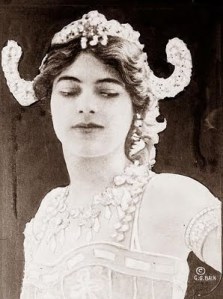
She writes articles on fashion history and culture on her own blog, Thread for Thought, but is just as comfortable discussing what makes the sleazy Brit serial killer pic "10 Rillington Place" so pleasingly cynical. She's just as insightful about the 1936 Soviet anti-American propaganda comedy musical "Circus" as she is about the work of John Waters.
Plus, she allegedly made out with a one-legged French sailor once. Allegedly.
All this meant that, when I decided I was going to look for voices outside the horror blog world to include in this series, she was immediately on the short list of people to ask. I'm very happy she could contribute and very excited to introduce her on ANTSS.
Occasionally fancying myself an exotic woman of mystery too, I have a special place in my heart for that early 20th century icon, The Vamp. When my friend suggested I write about them, I welcomed the opportunity to revisit some silent films when this aesthetic was solidified in concept and look.
THEDA BARA & THE LURE OF THE EXOTIC
Though Theda Bara (1890 – 1955) enshrouded her adult life in mystery, she was born plain old Theodosia Goodman in Cincinnati, OH. Hollywood producers gave her the anagram of “Arab death,” on the one hand cultivating her image of smoky, exotic sensualism -- claiming she lit incense on her sets and swathed herself in tiger pelts -- and on the other hand, hyping the macabre and frightening side of her.

The vamp image, incorporating the requisite sex and death themes.
Most recognize the term "vamp" to mean a femme fatale -- an irresistible woman who leads to the destruction of those who surround her, typically men. But the term was initially coined only after the success of Theda Bara's single surviving film, A Fool There Was (1915), in which her gleefully man-destroying character is listed in the credits simply as “The Vampire.” Based on Rudyard Kipling's poem “The Vampire” (1897) and Sir Edward Burne-Jones' painting of the same name (1897); the visual inspiration is obvious:

Sir Edward Burne-Jones's "The Vampire"
In A Fool There Was, The Vampire is seen in her nightgown several times, casting a spectral quality over her. Opaque and voluminous, they are not lingerie we are accustomed to today, but were risqué for the time, obviously derived from Burne-Jones's sex-laden picture.

The Vampire grinning over her dead lover.
When wearing outerwear, The Vampire wore the amusingly impractical (and thankfully short-lived) hobble skirt, topped with exotic turbans and heavily kohled eyes. To seduce her victim she drops a flower and lifts her skirt to reveal her ankle -- she is unashamed to show blatantly erotic skin.
What differentiated Theda from other actresses of her time was her other-worldliness, which she cultivated with her Oriental aesthetics. The horror genre is filled with tales of distant or remote lands; the audience's presumed unfamiliarity with the locale makes the fantastic tales slightly more plausible; the storyteller prays on the public's inherent mistrust and simultaneous attraction to the exotic, The Other. Though the most exotic location in A Fool There Was was Italy (puzzingly portrayed as a palm tree paradise more suggestive of the Far East), The Vampire produces a non-specific and highly erotic exoticism. Not a tremendous actor, it was largely Theda's unusual costumes and makeup on and off-screen that enshrouded her in Oriental mystique and secured her notoriety.
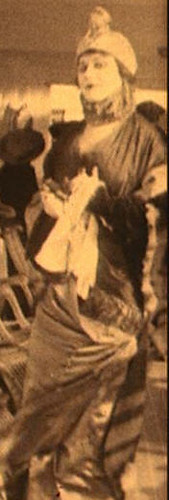
Theda Bara in hobble skirt and turban ensemble
Promises of harem girls with all the connotations of master / slave dynamics and orgies have been irrevocably linked to soft, sheer, feminine fabrics that simultaneously cover and reveal forbidden flesh (see my post on Innerwear as Outerwear on this subject). Seemingly anticipating the Egyptian madness that occurred after the 1922 discovery of King Tutankhamun’s tomb, the Far East captivated the imagination of the Western world. Designer Paul Poiret (1879 - 1944) made his mark on the fashion world by morphing the 19th century S-shape silhouette into un-corseted, athletic figures, and he incorporated many lose-fitting, Oriental-inspired designs to this end including harem pants, “formal” silk pajamas, and turbans. Poiret designed extravagant costumes for stage productions, hosted legendary Arabian-themed costume parties, his fondness for theatrical-scale dress-up evident in the fashions he produced for general consumption.
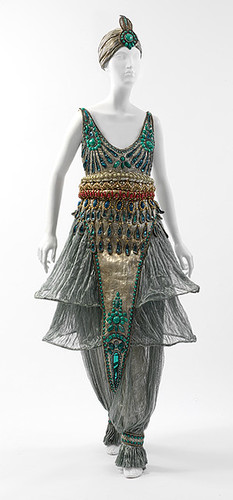
Paul Poiret, harem ensemble, 1911
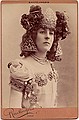
Even earlier was Emilienne d’Alençon (1869 – 1946) who performed at the Folies Bergères in the 1890s (with trained rabbits!) and was just as famous a courtesan, who wore an Art Nouveau inspired Salome costumes:
The Ballet Russes' performance of “Schéhérazade” in 1910 was enormously successful, due in large part to the extravagant costumes of vague eastern inspiration:
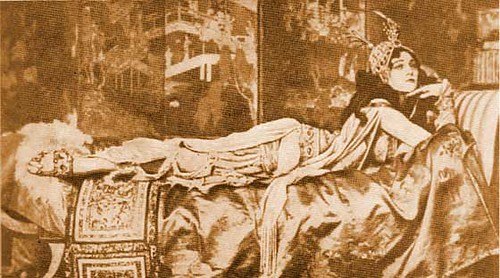
Ida Rubinstein in Ballet Russe "Scheherazade," 1910
Erte, who worked with Poiret and with whom I am obsessed, was yet another costume designer who marketed sensual Oriental decadence for lavish stage productions.
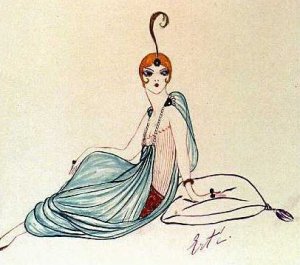
Erte Fashion Sketch with turban and harem pants
Mata Hari (1876 – 1917), the exotic Orientalist dancer of Dutch descent who posed as princess from Java while acting as courtesan and spy, was executed by firing squad just 2 years after A Fool There Was. Rumor has it that she blew a kiss to her executioners.
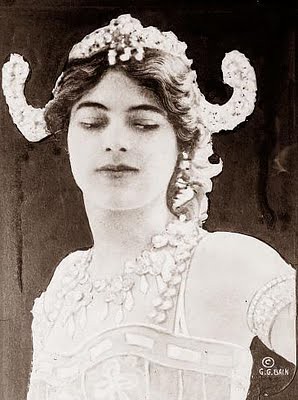
Mata Hari
Similar to our Theda Bara, non?
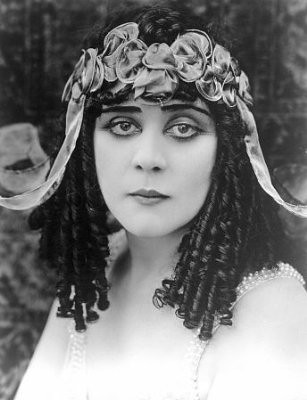
Theda Bara publicity shot for Cleopatra (1917)
Theda tapped into a cultural obsession with styles of the Far East, while exploiting the unease and xenophobia that often accompanies our regard of The Other, rolling it all into a destructive, man-eating "vampire" character. The Vamp concept was to evolve, though never to shake the ruinous qualities Theda imbued in her.
LOUISE BROOKS & MODERN ADVANCEMENTS
As Theda's star waned, a new Vamp talent stepped up: Louise Brooks (1906 - 1985). If Theda was the vaguely ancient, exotic vamp, Louise was her modern flapper vamp successor. As women's rights gained momentum in America, a powerful new woman emerged, wearing visible makeup as she walked to the voting polls, smoking and drinking and dancing in shift dresses that bared shins! Even as many women embraced this freedom, societal concerns of propriety remained and moralist detractors prophesized of hedonistic anarchy. Dress also changed radically in the nineteen-teens, with fewer layers that a woman could slip into (and out of!), exposing more skin than ever. And so Louise Brooks was a very different looking vamp from Theda, even while her characters carried the torch of man destroyer.
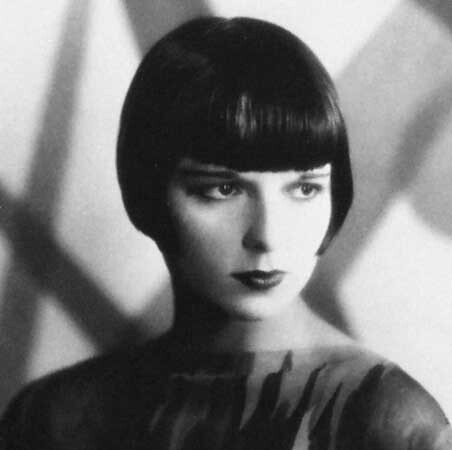
Louise Brooks, 1928
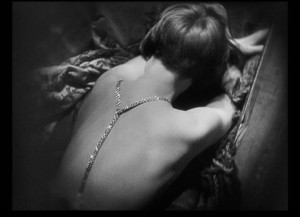
Pandora's Box (1929) was adapted from 2 erotic plays written in the 1890s by Frank Wedekind, but updated to modern times. As many young women cut their cumbersome long hair, Brooks as the Lulu character sports her own iconic, modern bob and wears clothes un-constrictive enough that she can do light gymnastics (like swing from a strongman's biceps), hinting at the newly acceptable athleticism for women (see my post on Athletic Aesthetics). The erotic zones had shifted and multiplied since Theda Bara’s time, moving from the ankle to the shoulders, back, legs, and breasts which were often displayed braless.

Lulu appears practically naked in this Y backstrap dress.
Having become a somewhat accidental murderess, Lulu goes into hiding and curls the famous hair, sweeping it off her forehead. Ridiculous as it sounds, Brooks' hairstyle was so recognizable that this shoddy disguise actually succeeds in confusing the audience a little, though Lulu is discovered anyway.
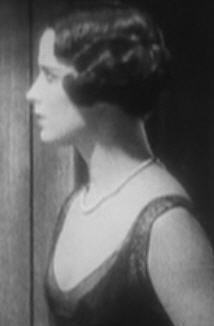
Lulu is a dangerous vamp not because she's dark, controlling and malicious, but because she's a beautiful young woman whose very power is derived from her lack of pretension and seeming ignorance of her own sexual potency, her delicious un-self-conciousness. One-upping Bara's Vampire, Lulu was a double threat desired by both men and women, so potent was her sexual power. The Pandora of the Greek myth was not an inherently evil woman, just one whose curiosity got the better of her, with unfortunately dire consequences. Lulu is not even interested in money or advancing her social status -- she shows equal preference for newspaper moguls and paupers, all of whom are trying to exploit her. However, she shares with other vamps her unrepentantance for acts that inconvenience or even destroy others and herself -- they are all animalistic, with no regrets.
She’s an unusual vamp fatale because she doesn’t have malicious intent. “Money, they all want money!” she complains of her blackmailers and suiters alike. She's not a gold-digger, she's simply a careless and carefree pleasure-seeker -- exactly what conservatives feared about real-life flappers and, by extension, the women's movement.
RESURRECTION OF THE VAMP
Since these early 20th century beginnings, the vamp has been resurrected in film and fashion many times. Blood sucking, literal and figurative, has unavoidably sexual connotations, and fetish gear has both influenced and been influenced by vamp(ire) lore. Fashion photographer Helmut Newton channels the sexy and macabre themes of bondage and female sexual power regularly. Even as women expose themselves in his photos, they seem to retain absolute authority over their settings:

Helmut Newton photo, c. 1990s
Impulse control is often explored in times of economic or political turmoil. True to point, there has been a rash of vampire productions recently including Twilight and the True Blood HBO series, but truth be told, I much prefer the original vamps!
Further Reading:
- Fashion, Desire and Anxiety, Rebecca Arnold
- Fashion Fetishism, David Kunzle
- Fetish: Fashion, Sex & Power, Valerie Steele
- Seduction: A Celebration of Sensual Style, Caroline Cox
- “The Girl in the Black Helmut,” Kenneth Tynan
Tuesday, September 15, 2009
Mad science: Gross.
In an email with the apt subject line of "Gah!", my friend Heather sent me a link to a post in Wired's "Geekdad." The post is titled "When nature is freakier than science fiction." In it, the blogger lists three freaky animals.
The third one is your new least favorite thing ever.
Proving that, while she is the generous and bountiful source of all, Mother Nature is also a bit of a sadistic freak, I give you the "unnamed parasitic isopod."

Here's the description:
Finally, fishermen off the northern coast of France have found a large parasitic isopod (a relative of the louse) that has evolved a rather hideous method for survival in its host: It gets into the fish’s mouth and then devours its tongue. It then attaches itself at the back of the fish’s throat where it presumably feeds of whatever the fish normally eats. The really bizarre part is that the fish doesn’t seem to suffer any ill effects other than the loss of its tongue.
The weaver fish's f-ed up human-like teeth just add to the omfg-ness of the whole thing.
The third one is your new least favorite thing ever.
Proving that, while she is the generous and bountiful source of all, Mother Nature is also a bit of a sadistic freak, I give you the "unnamed parasitic isopod."

Here's the description:
Finally, fishermen off the northern coast of France have found a large parasitic isopod (a relative of the louse) that has evolved a rather hideous method for survival in its host: It gets into the fish’s mouth and then devours its tongue. It then attaches itself at the back of the fish’s throat where it presumably feeds of whatever the fish normally eats. The really bizarre part is that the fish doesn’t seem to suffer any ill effects other than the loss of its tongue.
The weaver fish's f-ed up human-like teeth just add to the omfg-ness of the whole thing.
Monday, September 14, 2009
House of Silent Scream: "Watching silent movies as if they were other people's dreams."
 Denis, the international man of mystery behind the punctuation enhanced "The Horror!?" blog, was, until very recently, the best kept secret in the genre blog biz. Smart, insightful write-ups on a mind-boggling array of films. He's to horror blogging what Elvis Costello is to music: He's doing great work all over the map. Lucha flicks, kung fu horror, Euro-trash exploiters, Bollywood slashers, chance's are the Denis has been there and written it up.
Talent, like blood, will out and Denis is now also posting work at the excellent "WTF-Film" site - schooling an ever broader audience on the topics such as "the wild man of the toilet" from 2004's "Oh My Zombie Mermaid."
Special thanks to Denis for taking the time to contribute to the anniversary celebrations. Screamers and Screamettes, dig hard babies!
I find writing about silent movies - much more so than actually watching them - exceedingly difficult. While I usually don't even flinch when confronted with differences in style or filmic language, silent movies always seem to come from more than just a different time or place and to deserve a more scholarly treatment than I am capable of.
The problem is amplified even further when a film has been as heavily analyzed as Friedrich Wilhelm Murnau's Nosferatu - Eine Symphonie des Grauens. There is probably not much to say about it that hasn't already been said. Fortunately, the nice thing about blogging is that one's personal lack of knowledge does not always need to keep one away from trying to wring out a few words about a film.
Even better - I'm not all that interested in talking facts about movies anyway, especially not about films like Nosferatu which invite one to be read as dreams rather than narratives.
This method of watching silent movies as if they were other people's dreams, forgoing the need for logic, plot and other unnecessary ballast is the best way to derive pleasure from them for me and makes it easier to watch European films of the silent era than the often slicker American ones which on paper keep much closer to our modern sensibilities.
The German filmmakers of the Weimar Republic were a very peculiar mix of the commercial filmmaker of today and the mad scientist of future movies, giving their better films a mood that I find quite close to that of other films better understood as dreams than as narratives - the European exploitation movies of much later periods. Yes, I propose to watch Murnau films as if they were made by Jess Franco.
The commercial interests of Nosferatu are obvious. Taking the basic plot of a novel like Stoker's Dracula (of course without paying the author's estate) as the base for your film is as commercially minded as anything Roger Corman ever did, although Corman would never have been so obvious about it that you could have sued him.
But I don't think that the interesting parts of Nosferatu are those close to the book. It is much more important which parts of the book Murnau and his scriptwriter Henrik Galeen choose to ignore.
I see the original Dracula as a modernization of Gothic tropes for the contemporary British audience of the 1890s and have a lot of sympathy for interpretations of Dracula as standing in for venereal disease and/or the fear of the other. Murnau's film, though, isn't interested in syphilis or modernization of tropes at all (which doesn't mean that he has nothing to say about/to his contemporary world - that part comes automatically). On the contrary, Nosferatu is full of the medieval attacking a present that seems already too much in thrall of the past anyway. Isn't that very German of it?
For me, as someone who finds parts of it still downright terrifying, this is the point from which the film derives most of its strength: Max Schreck's Nosferatu is an ancient, ancient thing come to eat up the future and drag the present back into his past of rats and plague, not so much a corrupting influence as Dracula is, but a regressive one. Nosferatu's horror is the horror of a past that has never been laid to rest and so just keeps shambling on, smothering the young and preventing a future that's worth living.
Seen from this angle, the end of the film itself starts to look horrifying. Even though the past is laid to rest, Ellen Hutter's youth and innocence have to be sacrificed and she herself has to become something exceptionally medieval herself - a saint. And where I stand, there is nothing more horrifying than a saint when you are trying to cope with the present.
Sunday, September 13, 2009
Movies: "It has been proven that people just stay stuff because they want to have the spotlight on them."
 Back in February, I featured a news item about Jonathan Sharkey, "one-time presidential hopeful and full-time Satanic vampire overlord of Toms River, Minnesota." Sharkey, who worships the pagan goddess of witchcraft and claims to live off human blood, made headlines back in '07 when he threw his hat in the national ring as the presidential candidate of the Vampires, Witches, and Pagans Party. For a brief moment, he was a hot enough item to merit a Tina Fey delivered punchline on SNL's regular "Weekend Update" bit.
I brought him up in February of this year because his Satanic Majesty failed to make a court date to answer charges he threatened a 16-year-old girl her referred to as "his wife and princess."
From my the story that inspired that original post:
The criminal complaint says he was running for president in 2007 when the 16-year-old girl wrote a message of support on his MySpace page. She told police they began dating online, and the threats began when she tried to break off the relationship.
She told police that "in a desperate attempt" to get him to leave her alone, she had e-mailed him that she was a member of an elite vampire hunter society and that continuing their relationship would put him in danger. Her father told police he talked to Sharkey, but Sharkey continued to call the girl and write letters to her parents.
Well, as it turns out, Sharkey was the subject of a 2007 documentary that chronicled his ill-fated '06 run for Minnesota governor. And, because the Internets are slow to anger and steadfast in their forgiveness, this doc is available free on Hulu. For realz.
That's right. Listen in awe as Sharkey explains that he banged and then married his own half-sister. (The then gubernatorial candidate explains to the camera, "I'm not the kind of guy to ask a girl her last name or anything like that.") Thrill to Sharkey's explanation of his proposed anti-terror policies: "Especially considering the first day after I am sworn in, I am going to personally impale 10 people that I know have violated my rights and have committed acts of terrorism." Squirm as you watch Jonathan and his wife feed of one another. You'll get that ol' "walking in on mommy and daddy's special hug" feeling all over again.
As a counterpoint to Sharkey's Byronic self-regard and Quixotic indifference to reality, the film shows the surprising poignant struggle of Julia Sharkey Carpenter, who claims that her pagan beliefs got her fired from her school bus driving gig, a gig that seems to be her Rushmore. At one point, when asked what the most perfect job she can conceive of would be, Julia thinks hard about it and then answers that she would want enough money to buy her own school bus. Her odd mixture of touchy independence and essential decency makes he a brilliant foil for Sharkey. She also gets the film's best line when she tells Sharkey, without any sense of irony or self-awareness, "It has been proven that people just stay stuff because they want to have the spotlight on them."
I was going to do a review of this odd, low-fi treat, but I realized that the film overwhelms my modest critical capacities.
Saturday, September 12, 2009
House of Silent Scream: Dance, Dracula, dance!
 I think I can say, without fear of contradiction, that Guy Maddin's 2002 Dracula: Pages for a Virgin's Diary is the best silent, all-ballet retelling of the Dracula story that I've ever seen.
Yeah. Ballet. Leaping and such.
Wait! Come back!
Despite sounding like a huge, self-satisfied, art house gimmick, the whole thing holds together surprisingly well. (That's a sentence that works as a summary for Maddin's entire career.) In fact, it only takes a few minutes for these overtly artsy and seemingly provocative decisions to start making sense and pay off. By taking a familiar story and rendering it in dance, the film becomes a sort of ritualistic recreation of one of modern life's foundational archetypes. "Going through the motions" of yet another version of Dracula calls attention to the core of the tale and highlights the power of its repetition. As a viewer, we're forced to re-engage with the story, translating the soundless actions we see through the lens of the hundreds of retellings and interpretations to which we've been exposed, simply by virtue of living in the modern world.
Maddin's reliance on silent film techniques and tech – something he's done in several films to greater or lesser success – seems, in Dracula, to mesh with the overt artificiality of the medium of dance. It parallels the negations at the heart of dance. The same way ballet's force comes partially from eschewing naturalism and dialogue, the self-imposed restrictions of silent filmmaking make Maddin reconsider the system of film representation and encourage him to get the most he can out of what he leaves in play. There's a certain irony here in that, as retro as Maddin's approach is, its suitability for this project is something available only to a modern filmmaker. Without the sense of a deliberate refusal to use certain techniques – something that was not available to filmmakers in the silent era – then the film would lack its lush and self-aware artificiality.
The film is supported by a powerful performance by Wei-Qiang Zhang as the famed vampire. Zhang is a compelling performer, and I say that even though he has no recourse to dialogue or naturalistic motion. His Dracula is convincingly animalistic and sensual, and Zhang uses the defamiliarizing nature of the medium to invest his Drac with profound uncanniness that, in its way, works as wonderfully as Max Schreck's Nosferatu make-up. While watching Zhang's performance, I was reminded of those "my favorite vamp lists" that sprung up in protest over the EW best vampy run down. I don't recall Zhang's interpretation of Stoker's iconic villian appearing on any list, but I think an argument could be made that the force and originality of his Dracula earns him a place on the shortlist.
Tara Birtwhistle's Lucy deserves special mention too. As with most adaptations, Mina gets the greatest amount of screen time and is more central to the plot. But Ms. Birtwhistle's Lucy, with the surging eroticism and attractive mix of innocence and calculation, is the character who will linger in your mind longer.
For all its visual innovation, the plot of Maddin's Dracula (based on the ballet by Mark Godden) is remarkably true to the source material. In fact, Maddin brings back to foreground elements that most film adapters – going all the back to Lang – leave out. Notably, Maddin dredges up the novelistic Dracula's bizarre relationship with money. Though largely forgotten, Stoker's Dracula and his opponents are oddly obsessed with money. Dracula pauses the tight action of Harker's intro, the most intense part of the book, to divert the plot and dig up some buried gypsy treasure. Dracula's financials are considered part of his threat: He partially represents a dangerous flood of foreign capital into the British system. Later, Mina reflects on the efforts of Harker and Lucy's three suitors to bring down Dracula and takes special notice of the financial sacrifices they've made. She contrasts their noble use of money with Dracula's sinister transactions. What all this money stuff is supposed to mean has baffled critics of the novel. Various Marxists have suggested it some hold over Victorian fantasy of the innate goodness of the white upper class in the face of an increasingly international system of capitalism that does not respect Anglo notions of value. Others have suggested it reflects Stoker's own financial unease. Maddin suggests it links up with the xenophobia of the original. Whatever Stoker's intentions, the money-thing is a bizarre facet of the original that most interpreters simply drop. Maddin gets points for working it back in.
Where Maddin does diverge from the original text, he tends to explore familiar territory. Maddin highlights the sensuality of Lucy and plays her death like it was a lynching at the hands of a puritanical masculine mob enforcing Victorian, repressive norms. Though there's an undercurrent of this in the novel, the off-kilter feminist subtext tends to become the text in modern adaptations. Maddin doesn't innovate here, but rather gives us a nod to the story's most common modern reading. The end of Maddin's film also more resembles final scenes of Browning's seminal 1931 adaptation than Stoker's endgame, though Maddin closes out on a shot of an impaled Dracula that evokes the terror tactic Drac's real life inspiration became famous for.
Maddin does add a strange steampunkish iron lung for Lucy mom into the piece. To be honest, I couldn't tell where Maddin was going with that particular bit. At first I thought it might be intended as a loose parallel to Lucy – another women cut off in some way from the world. But, honestly, I'm not sure Lucy is that cut off from the world. Even prior to her vampification, Lucy is a highly sexualized figure. So, I don't know. Maddin also foregrounds the sexual identity of Harker, a figure most adapters shuffle off-stage as soon as the novel's introductory scenes are complete. In fact, his diary is the titular "virgin's diary." Maddin highlights the sexual aspects of Harker's encounter with Dracula and his brides, then plays out the implications of what that would mean for Hacker in terms of readjusting to the safe, Victorian norms his marriage with Mina represents. Unlike the somewhat inscrutable iron lung thing, this adds a nice element of depth to Harker and Mina, a relationship that I think is usually viewed as little more than a speed bump on the way to the more tantalizing relationship between Mina and Dracula.
I'll admit that the pitch for this flick is almost a deal breaker. Happily, it is neither opaque or vapidly pretentious. For all the preciousness of the project, Maddin's finished product is more artsy than fartsy and worth the time of any fan of silent cinema, Dracula, or envelope pushing filmmaking.
Here's the trailer:
Friday, September 11, 2009
Link Proliferation: The new needs friends.
Buried (Under the Fold) Alive, Part I
Like cheese and science, old comments tend to get tossed away. While the occasional post might get a few hits now and then even after it has dropped off the main page, comments are more ephemeral. Recently, ANTSS received two comments that I think deserve a little attention.
First, like many of you, I was approached by the men and women of the NYC-based Charred Oak Films about crowd sourcing their indie horror-comedy Always a Bridesmaid.
Clicky peeky and then come on back.
I don't necessarily want to shill for their flick, but I do think it has the potential to be a winner. Let's face it: Women-centric horror packs them in. The comedy angle makes its tent slightly larger. And another project on their docket, Satan Camp, suggests that these folks can tap into a popular retro vibe.
But, that aside, supporting something like Always a Bridesmaid is a blow against the Empire. Specifically, the Empire of half-assed remakes, follow-the-leader copy cats, cookie cutter, formulaic, Hollywood crappola.
We vote with our dollars. You may have written the most insightful, witty, and devastating critique of Halloween II to ever grace the Interwebs. But I'll tell you what, Skippy; they don't give a crap what you said so long as ponied up like all the other marks.
Imagine this: What if everybody who shelled out ten to twelve Washingtons had, instead, kicked it towards funding an indie horror flick? The estimated budget for Always a Bridesmaid is $16,5000 (nearly one hundredth of the budget for Halloween II). At this point Zombie's flick has made more than $25 million. With that kind of cash, you could fund more than 1,500 films on the scale of Bridesmaid.
Dig hard, babies. This blog gets about 120 visitors a day. For the cost of Manhattan movie ticket, we'd raise more than a grand in a single day.
Like the weather, everybody bitches about the lamification of horror at the hands of talentless bean-counting studio douches. But unlike the weather, we can do something about it.
I'm not silly enough to believe that every indie horror flick is a gem. Nor do I believe that taking big studio scratch is like touching pitch, it blackens the hands. But preserving the diversity of voice in the genre, specifically by acting as patrons and friends to independent and developing, ensures the long term health of the genre. More than any ranting and raving we do as critics, its our actions - specifically our spending - that define us as fans.
Will Bridesmaid be great? Will it suck? I don't know. I hope to find out though. Even if only because it would mean we were all good stewards of our genre.
So, anyway, I kicked 'em a few bucks.
Buried (Under the Fold) Alive, Part II
Speaking of preserving voices . . . The second comment I wanted to draw attention to was attached to the Sprites song I posted a couple days ago. Musician Zane Grant has a nifty musical treat for ya'll. I'll just repeat his intro:
My sister and I did a 'dawn of the dead' song for a cd that retold the stories of different horror movies from the narrative perspectives of people in the movies. I must admit, The Sprites 'Dawn' song is better than ours, but our 28 days later and (drunk) susperia were fun if people want to check them out:
"28 Days Later"
"Suspiria" (drunk take)
Thanks for stopping by Mr. Grant.
Wrap Yourself in Awesome
My favorite merch tie-ins have always been those pieces of swag that appear to have come from the fictional world of the work they promote. It would be all good and well to have a t-shirt with the poster image for Die Hard on it. But it's about a million times cooler to have a shirt that appears to be swag from the Nakatomi Corporation.

The utterly incandescently brilliant t-shirt shop Last Exit to Nowhere mongers just such coolness. Here's some more samples:


Bonnet Rippers?
Now this is non-horror (though perhaps a bit frightening depending, I guess, on your tastes), but it was too odd not to pass along.
Okay, so this isn't horror, but it is too delightfully odd to pass up. There's a survey piece on the new romance subgenre of "bonnet romance" in, of all places, The Wall Street Journal. They're basically Amish/outsider forbidden love tales.

From the article:
Most bonnet books are G-rated romances, often involving an Amish character who falls for an outsider. Publishers attribute the books' popularity to their pastoral settings and forbidden love scenarios à la Romeo and Juliet. Lately, the genre has expanded to include Amish thrillers and murder mysteries. Most of the authors are women.
Here's a sample, from Cindy Woodsmall's bonneter When the Heart Cries:
His warm, gentle lips moved over hers, and she returned the favor, until Hannah thought they might both take flight right then and there. Finally desperate for air, they parted.
Whew. Mother, hide the little ones!
Sure the Englishers dig on it, but what do the Amish think:
While there are no religious strictures against contemporary novels, the church has traditionally viewed fiction as distracting and deceitful, says Donald Kraybill, a senior fellow at the Young Center for Anabaptist and Pietist Studies, a religious studies center at Elizabethtown College.
Some Amish have nevertheless become avid fans. An Amish woman in Lancaster told Ms. Lewis that "all the women in our church district are reading your books under the covers, literally," Ms. Lewis said. Ms. Brunstetter, who lives in Tacoma, Wash., said several Amish families in northern Indiana have played host to book signings in their homes for her "Sisters of Holmes County" series.
Like cheese and science, old comments tend to get tossed away. While the occasional post might get a few hits now and then even after it has dropped off the main page, comments are more ephemeral. Recently, ANTSS received two comments that I think deserve a little attention.
First, like many of you, I was approached by the men and women of the NYC-based Charred Oak Films about crowd sourcing their indie horror-comedy Always a Bridesmaid.
Clicky peeky and then come on back.
I don't necessarily want to shill for their flick, but I do think it has the potential to be a winner. Let's face it: Women-centric horror packs them in. The comedy angle makes its tent slightly larger. And another project on their docket, Satan Camp, suggests that these folks can tap into a popular retro vibe.
But, that aside, supporting something like Always a Bridesmaid is a blow against the Empire. Specifically, the Empire of half-assed remakes, follow-the-leader copy cats, cookie cutter, formulaic, Hollywood crappola.
We vote with our dollars. You may have written the most insightful, witty, and devastating critique of Halloween II to ever grace the Interwebs. But I'll tell you what, Skippy; they don't give a crap what you said so long as ponied up like all the other marks.
Imagine this: What if everybody who shelled out ten to twelve Washingtons had, instead, kicked it towards funding an indie horror flick? The estimated budget for Always a Bridesmaid is $16,5000 (nearly one hundredth of the budget for Halloween II). At this point Zombie's flick has made more than $25 million. With that kind of cash, you could fund more than 1,500 films on the scale of Bridesmaid.
Dig hard, babies. This blog gets about 120 visitors a day. For the cost of Manhattan movie ticket, we'd raise more than a grand in a single day.
Like the weather, everybody bitches about the lamification of horror at the hands of talentless bean-counting studio douches. But unlike the weather, we can do something about it.
I'm not silly enough to believe that every indie horror flick is a gem. Nor do I believe that taking big studio scratch is like touching pitch, it blackens the hands. But preserving the diversity of voice in the genre, specifically by acting as patrons and friends to independent and developing, ensures the long term health of the genre. More than any ranting and raving we do as critics, its our actions - specifically our spending - that define us as fans.
Will Bridesmaid be great? Will it suck? I don't know. I hope to find out though. Even if only because it would mean we were all good stewards of our genre.
So, anyway, I kicked 'em a few bucks.
Buried (Under the Fold) Alive, Part II
Speaking of preserving voices . . . The second comment I wanted to draw attention to was attached to the Sprites song I posted a couple days ago. Musician Zane Grant has a nifty musical treat for ya'll. I'll just repeat his intro:
My sister and I did a 'dawn of the dead' song for a cd that retold the stories of different horror movies from the narrative perspectives of people in the movies. I must admit, The Sprites 'Dawn' song is better than ours, but our 28 days later and (drunk) susperia were fun if people want to check them out:
"28 Days Later"
"Suspiria" (drunk take)
Thanks for stopping by Mr. Grant.
Wrap Yourself in Awesome
My favorite merch tie-ins have always been those pieces of swag that appear to have come from the fictional world of the work they promote. It would be all good and well to have a t-shirt with the poster image for Die Hard on it. But it's about a million times cooler to have a shirt that appears to be swag from the Nakatomi Corporation.

The utterly incandescently brilliant t-shirt shop Last Exit to Nowhere mongers just such coolness. Here's some more samples:


Bonnet Rippers?
Now this is non-horror (though perhaps a bit frightening depending, I guess, on your tastes), but it was too odd not to pass along.
Okay, so this isn't horror, but it is too delightfully odd to pass up. There's a survey piece on the new romance subgenre of "bonnet romance" in, of all places, The Wall Street Journal. They're basically Amish/outsider forbidden love tales.

From the article:
Most bonnet books are G-rated romances, often involving an Amish character who falls for an outsider. Publishers attribute the books' popularity to their pastoral settings and forbidden love scenarios à la Romeo and Juliet. Lately, the genre has expanded to include Amish thrillers and murder mysteries. Most of the authors are women.
Here's a sample, from Cindy Woodsmall's bonneter When the Heart Cries:
His warm, gentle lips moved over hers, and she returned the favor, until Hannah thought they might both take flight right then and there. Finally desperate for air, they parted.
Whew. Mother, hide the little ones!
Sure the Englishers dig on it, but what do the Amish think:
While there are no religious strictures against contemporary novels, the church has traditionally viewed fiction as distracting and deceitful, says Donald Kraybill, a senior fellow at the Young Center for Anabaptist and Pietist Studies, a religious studies center at Elizabethtown College.
Some Amish have nevertheless become avid fans. An Amish woman in Lancaster told Ms. Lewis that "all the women in our church district are reading your books under the covers, literally," Ms. Lewis said. Ms. Brunstetter, who lives in Tacoma, Wash., said several Amish families in northern Indiana have played host to book signings in their homes for her "Sisters of Holmes County" series.
Thursday, September 10, 2009
House of Silent Scream: The extension of horror.
Today's House of Silent Scream is a real treat.
Here's an odd little factoid about Zoe, mistress of the beautiful and brilliant Zoe in Wonderland bog. Today's installment of the House of Silent Scream will be the second time Zoe's been a guest blogger here. That's not the factoid. Here's the factoid: Zoe's first post, a collection of gas-mask themed art work is one of the most popular posts ever featured on this blog. Not only was a big hit when it posted, but it remains a popular entry point for the blog and regularly ranks as the third or fourth most visited post in the entire history of the blog. Seriously. She could do this blog without me!
So, without further ado, here's Zoe and her partner in crime Gabriel - CRwM
"We crossed long, high-vaulted corridors; the wavering light borne by Franz threw a strange brilliance in the thickness of the gloom. The vague forms of the colored capitals, pillars and arches seemed suspended here and there in the air. Our shadows moved forward at our side like grim giants and on the walls the fantastic images over which they slipped trembled and flickered..." --ETA Hoffmann, Das Majorat

The 1920 film The Cabinet of Dr. Caligari found in the Expressionism of post-war Germany a perfect stylistic match for its tale of madness and murder. The art movement preceding Expressionism was Art Nouveau: flowers and natural ornament, wild curls of hair, free-flowing imagery. As people went into and then came out of the "Great War," the art world morphed into one of Expressionism, which focused more on vicious angles and dark, cavernous, claustrophobic, unbalanced settings. There had been a general loss of faith in man's ability to be "alive" in any real sense of the word; people felt that their souls had been sapped out, they felt there was a real evil to humanity that had before seemed impossible. Even nature became suspect, no longer the bountiful and embracing world of Art Nouveau, but abstract, sharp, aggressive, made up of sinister trees and dark caves...

"Prager Street"
Otto Dix
(note the focus on destroyed bodies, begging and militarism, with sharp angles expressing severe physical pain. Also the "stacking" effect: instead of showing the audience the distance covered by the street in perspective, the artist has piled everything on top of itself.)
"In the months between Armistice Day and the signing of the Treaty of Versailles in June 1919, an estimated 700,000 Germans died of hunger. "The German people," Count Harry Kessler, the eloquent chronicler of post-WWI Berlin, wrote in his journals, "starving and dying by the hundred thousand, were reeling deliriously between blank despair, frenzied revelry and revolution. Berlin had become a nightmare, a carnival of jazz bands and machine guns." " (GreenCine)
Though several considerations (such as limited resources) went into the decision to make the 1920 film The Cabinet of Dr. Caligari in an Expressionist style, it cannot be denied that this style served the film exceptionally well. It strikes me that Expressionism, especially German Expressionism, is a natural fit for the horror genre. This is all the more true in a silent film, where the audience cannot hear blood-curdling screams, or the menacing sounds of approaching danger. Horror films found in Expressionism a kindred spirit, a visual manifestation of the alienation, menace and danger which is their subject (theme). In the Expressionist set, there are no open spaces free of the shadows which conceal threats. Even interior spaces provide no relief, composed as they are of "absurd geometries."
The twisty, threatening trees and the narrow, suffocating hallways, heightened in their strangeness by the sharp contrast of light and dark are then matched by the pallor of the somnambulist's face and the dark rings under his black eyes, or the bizarre streaks in Caligari's hair and gloves. Caligari's total control over the somnambulist, his patients and his audience is shown by his almost constant placement over them, on stage or at the top of a long flight of stairs. The madness of that total control can be seen clearly in the over-wide shiftiness of his eyes.

Caligari
(From the MoMA collection)

Cesare climbing up with Jane's body
The Cabinet of Dr. Caligari is, as we see it, the tale of a madman, giving life to his illogical and paranoiac fears about the very man who aims to cure him. He imagines his doctor, in reality a kind and determined healer and a thoughtful scientist, really has the intention of wreaking his own personal vengeance using the the poor souls trapped in his realm as his tools. He tells a story of the Doctor traveling with a carnival along with a somnambulist, a man whose mind has been taken from him, who has no control over his own actions. The somnambulist, Cesare, is presented as having the ability to tell the members of the audience their futures, including the hour of their deaths. At night, the Doctor sends Cesare out to enact that final hour--for anyone who has annoyed him during the day.
In the original story by Janowitz and Mayer, the Doctor, representing not only Mayer's own former psychiatrist and nemesis, but also "the madness inherent in authority," (From Caligari to Hitler) was discovered at the end of the movie to be the evil controller of the somnambulist, as he was in the madman's rendition. Overwhelmed by his desire to document and analyze, to study certain habits and certain effects (read: to contribute to the advancement of science), he directed an evil and senseless violence, destroying both the soul of the somnambulist and the lives of his victims. Janowitz and Mayer were voicing a highly stylized and creative complaint against the authority that had led their country into WWI and society's unquestioning acceptance of the cold, violent march that industrialization and scientific advancement were leading them on.
All around them, the artistic world was heaving with this complaint:

"Explosion"
George Grosz
(Note the main contrast of black and red, the lack of shading, the angles and twisted trees, the sensation of things piled on top of each other)

"Bourgeois values, cold logic and unattainable beauty were tossed out the window; their art would be as raw, violent and dark as the world they lived in, driven by furious emotion toward a set of aesthetic characteristics that would later roughly define what we talk about when we talk about "Expressionism." " (GreenCine)
Janowitz and Mayer were furious with the decision of the director and the film company to add a frame to the story which exposed the narrator as a madman in an asylum and the story itself as no more than his odd, paranoiac ramblings. "A revolutionary film was thus turned into a conformist one--following the much-used pattern of declaring some normal but troublesome individual insane and sending him to a lunatic asylum" (From Caligari to Hitler).
But here's what's key about the artwork in this film. Even though Wiene ended the film with the scene which allowed us all to breathe a sigh of relief, realizing it was all just a paranoiac fantasy whose dreamer/creator was safely locked away, the visual aspect of that final scene is the same as it had been during the entire subjective telling of the story. That pressurized, constricted, violently shadowed and angular experience of madness and treachery was not simply in the madman's mind, because when we are brought out of his mind, in the end, to "reality," the world still looks the same: evil, terrifying, off-balance. As Caligari makes his diagnosis of the "mania" of the narrator, in the final seconds of the movie, he flips his hair arrogantly, and as the blackness comes into a circle around his face to mark the end of the film, the expression on his face is absolutely frightening. "I think I know how to cure him," he says. Behind him, the first steps in the cure are clear: the narrator is strapped tightly in a straight-jacket, lying on a bed (where Caligari had begun his diagnosis looking down on him from above), isolated not only from society by his commitment to the asylum, but even from the other members of the asylum.
The only "real" setting, in fact, is the gently curved wall on a garden path with actual, normal trees, where the narrator tells the story--that act of storytelling, then, is the one honest and sane thing that happens in the entire film. So in the end, it seems Wiene subverted his own subversion of the original film. He put the narrator in the nuthouse, yes, but isn't that what happens to those who protest too much against the evils of total authority? So that they don't disturb the general populous...
"You fools! This man is plotting our doom! We die at dawn!"
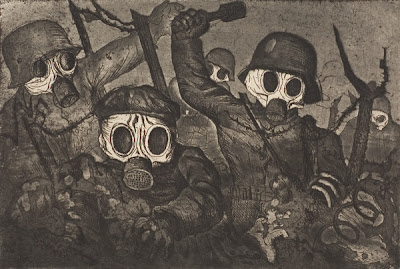
A small gift to CrWM, in thanks: "Stormtroops Advancing Under Gas," an expressionist etching and aquatint of faceless, soulless authority by the German Otto Dix, 1924.
--zoe and gabriel
Here's an odd little factoid about Zoe, mistress of the beautiful and brilliant Zoe in Wonderland bog. Today's installment of the House of Silent Scream will be the second time Zoe's been a guest blogger here. That's not the factoid. Here's the factoid: Zoe's first post, a collection of gas-mask themed art work is one of the most popular posts ever featured on this blog. Not only was a big hit when it posted, but it remains a popular entry point for the blog and regularly ranks as the third or fourth most visited post in the entire history of the blog. Seriously. She could do this blog without me!
So, without further ado, here's Zoe and her partner in crime Gabriel - CRwM
"We crossed long, high-vaulted corridors; the wavering light borne by Franz threw a strange brilliance in the thickness of the gloom. The vague forms of the colored capitals, pillars and arches seemed suspended here and there in the air. Our shadows moved forward at our side like grim giants and on the walls the fantastic images over which they slipped trembled and flickered..." --ETA Hoffmann, Das Majorat
The 1920 film The Cabinet of Dr. Caligari found in the Expressionism of post-war Germany a perfect stylistic match for its tale of madness and murder. The art movement preceding Expressionism was Art Nouveau: flowers and natural ornament, wild curls of hair, free-flowing imagery. As people went into and then came out of the "Great War," the art world morphed into one of Expressionism, which focused more on vicious angles and dark, cavernous, claustrophobic, unbalanced settings. There had been a general loss of faith in man's ability to be "alive" in any real sense of the word; people felt that their souls had been sapped out, they felt there was a real evil to humanity that had before seemed impossible. Even nature became suspect, no longer the bountiful and embracing world of Art Nouveau, but abstract, sharp, aggressive, made up of sinister trees and dark caves...
"Prager Street"
Otto Dix
(note the focus on destroyed bodies, begging and militarism, with sharp angles expressing severe physical pain. Also the "stacking" effect: instead of showing the audience the distance covered by the street in perspective, the artist has piled everything on top of itself.)
Though several considerations (such as limited resources) went into the decision to make the 1920 film The Cabinet of Dr. Caligari in an Expressionist style, it cannot be denied that this style served the film exceptionally well. It strikes me that Expressionism, especially German Expressionism, is a natural fit for the horror genre. This is all the more true in a silent film, where the audience cannot hear blood-curdling screams, or the menacing sounds of approaching danger. Horror films found in Expressionism a kindred spirit, a visual manifestation of the alienation, menace and danger which is their subject (theme). In the Expressionist set, there are no open spaces free of the shadows which conceal threats. Even interior spaces provide no relief, composed as they are of "absurd geometries."
The twisty, threatening trees and the narrow, suffocating hallways, heightened in their strangeness by the sharp contrast of light and dark are then matched by the pallor of the somnambulist's face and the dark rings under his black eyes, or the bizarre streaks in Caligari's hair and gloves. Caligari's total control over the somnambulist, his patients and his audience is shown by his almost constant placement over them, on stage or at the top of a long flight of stairs. The madness of that total control can be seen clearly in the over-wide shiftiness of his eyes.
Caligari
(From the MoMA collection)
Cesare climbing up with Jane's body
The Cabinet of Dr. Caligari is, as we see it, the tale of a madman, giving life to his illogical and paranoiac fears about the very man who aims to cure him. He imagines his doctor, in reality a kind and determined healer and a thoughtful scientist, really has the intention of wreaking his own personal vengeance using the the poor souls trapped in his realm as his tools. He tells a story of the Doctor traveling with a carnival along with a somnambulist, a man whose mind has been taken from him, who has no control over his own actions. The somnambulist, Cesare, is presented as having the ability to tell the members of the audience their futures, including the hour of their deaths. At night, the Doctor sends Cesare out to enact that final hour--for anyone who has annoyed him during the day.
In the original story by Janowitz and Mayer, the Doctor, representing not only Mayer's own former psychiatrist and nemesis, but also "the madness inherent in authority," (From Caligari to Hitler) was discovered at the end of the movie to be the evil controller of the somnambulist, as he was in the madman's rendition. Overwhelmed by his desire to document and analyze, to study certain habits and certain effects (read: to contribute to the advancement of science), he directed an evil and senseless violence, destroying both the soul of the somnambulist and the lives of his victims. Janowitz and Mayer were voicing a highly stylized and creative complaint against the authority that had led their country into WWI and society's unquestioning acceptance of the cold, violent march that industrialization and scientific advancement were leading them on.
All around them, the artistic world was heaving with this complaint:
"Explosion"
George Grosz
(Note the main contrast of black and red, the lack of shading, the angles and twisted trees, the sensation of things piled on top of each other)
Janowitz and Mayer were furious with the decision of the director and the film company to add a frame to the story which exposed the narrator as a madman in an asylum and the story itself as no more than his odd, paranoiac ramblings. "A revolutionary film was thus turned into a conformist one--following the much-used pattern of declaring some normal but troublesome individual insane and sending him to a lunatic asylum" (From Caligari to Hitler).
But here's what's key about the artwork in this film. Even though Wiene ended the film with the scene which allowed us all to breathe a sigh of relief, realizing it was all just a paranoiac fantasy whose dreamer/creator was safely locked away, the visual aspect of that final scene is the same as it had been during the entire subjective telling of the story. That pressurized, constricted, violently shadowed and angular experience of madness and treachery was not simply in the madman's mind, because when we are brought out of his mind, in the end, to "reality," the world still looks the same: evil, terrifying, off-balance. As Caligari makes his diagnosis of the "mania" of the narrator, in the final seconds of the movie, he flips his hair arrogantly, and as the blackness comes into a circle around his face to mark the end of the film, the expression on his face is absolutely frightening. "I think I know how to cure him," he says. Behind him, the first steps in the cure are clear: the narrator is strapped tightly in a straight-jacket, lying on a bed (where Caligari had begun his diagnosis looking down on him from above), isolated not only from society by his commitment to the asylum, but even from the other members of the asylum.
The only "real" setting, in fact, is the gently curved wall on a garden path with actual, normal trees, where the narrator tells the story--that act of storytelling, then, is the one honest and sane thing that happens in the entire film. So in the end, it seems Wiene subverted his own subversion of the original film. He put the narrator in the nuthouse, yes, but isn't that what happens to those who protest too much against the evils of total authority? So that they don't disturb the general populous...
"You fools! This man is plotting our doom! We die at dawn!"
A small gift to CrWM, in thanks: "Stormtroops Advancing Under Gas," an expressionist etching and aquatint of faceless, soulless authority by the German Otto Dix, 1924.
--zoe and gabriel
Subscribe to:
Posts (Atom)